
TL;DR Choose a studio that matches your scale and finish needs, shows relevant portfolio work, and explains methods, timelines and costs clearly. Visit the workshop or request detailed samples, confirm handling and insurance for shipments, and contact a local specialist to discuss your brief.
Finding the right sculpture casting service close to you means more than the nearest foundry. It is about matching technical capability, finish quality and project handling to your brief so the final piece meets artistic and practical expectations. This guide helps you compare local options, ask the right questions and move from briefing to a secure commission.
What to check first when vetting a local studio
Start by confirming experience and recent work that is similar in scale and material to your project. Look for photographs of finished sculptures or case studies, and ask whether they work in lost-wax, sand or investment casting for the sizes you need.
- Portfolio: recent sculpture commissions, including photos of castings and finished patination.
- Methods and materials: which alloys and casting processes they use and why.
- Workshop capability: capacity for large pieces, 3D tooling or finishing facilities on site.
- Conservation experience: handling, repair and restoration skills if you are working with historic pieces.
- Logistics and insurance: who arranges transport and what insurance covers damage in transit or at the foundry.
These checks narrow your choices. Once you have a short list, you can request more precise information and samples to compare quality and cost.
Step-by-step: how to compare quotes and choose
Prepare a concise brief that covers size, intended finish, timelines and any required patination or conservation work. Ask each studio to respond with a written estimate that separates material, labour and finishing costs so you can compare like for like.
- Share your brief and any reference images or a maquette.
- Request a breakdown of costs, lead time and proposed method (for example lost-wax or sand casting).
- Visit the workshop where possible to see examples and discuss packing, handling and quality control.
- Ask for sample finishes or small test pieces if the patination is critical to the project.
- Clarify payment schedule, cancellations and who is responsible for shipping and customs if relevant.
For a broader list of local firms to approach and to compare discovery methods, see the guide How To Find Metal Casting Companies Near You. Visiting shortlisted workshops in person often reveals finish standards and workshop practice more clearly than photos alone.
Parent guide and what to do next
If you are early in the planning stage, this article sits under a fuller selection guide that helps when choosing a casting partner for larger or recurring commissions. For a broader set of questions to use when evaluating foundries, see How To Choose A Casting Company Near You.
When you are ready to proceed, prepare your brief and contact a trusted local studio to request a detailed quote. For local enquiries, you can reach a specialist foundry at Bronzecraft to arrange a consultation and inspect examples:
Call +44 1953 459999 or visit the workshop at Unit 1, Bunns Bank Industrial Estate, Attleborough, Norfolk, NR17 1QD
FAQ
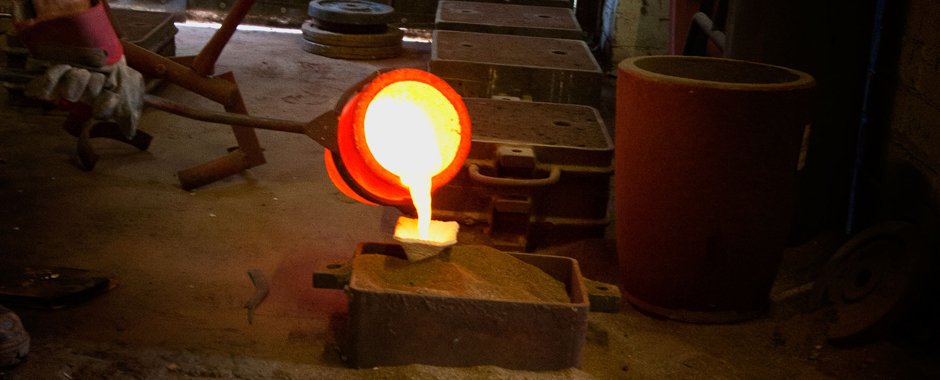
Lost-wax casting (also called investment casting) is a process where a wax version of your sculpture is encased in a mould, the wax is melted out, and molten metal is poured in to create a highly detailed replica. It matters because it captures fine texture and subtle modelling very accurately, which is why it is widely used for bronze sculpture and other work where surface quality and fidelity to the original are critical.
Costs vary widely with size, metal, edition size, complexity and finish, so there is no single typical price. As a minimum, ask each studio for an itemised quote that separates mould or pattern work, casting, chasing and patination, plus any transport and installation, so you can see where budget is being spent and compare like for like between suppliers.
Lead times depend on scale, complexity and how busy the foundry is: small pieces might be completed in a few weeks, while larger or more complex commissions can take several months from brief to delivery. Ask for a written schedule that sets out key milestones—such as pattern approval, casting, patination and shipping—linked to payments so expectations are clear on both sides before you commit.
Many art foundries offer restoration and conservation services alongside new casting, but the level of expertise varies. If you are commissioning work on a historic or high-value sculpture, confirm that the studio has specific conservation experience, ask how they document treatments, and check that handling, storage and transport are covered by appropriate insurance before agreeing to proceed.