
bronzecraft Ltd norfolks fine art foundry
The Trees of Midsummer House, midsummer common Jesus Green, Cambridge England
How a Norfolk foundry and a Cambridge culinary landmark created two timeless sculptures
https://en.wikipedia.org/wiki/List_of_public_art_in_Cambridgeshire
From Norfolk Foundry to Cambridge Landmark: How Bronzecraft Ltd Cast the Iconic Bronze Trees of Midsummer House
Introduction
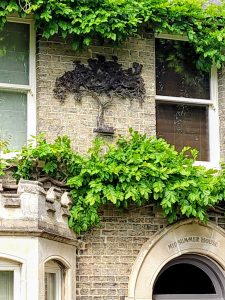
When you step into the award-winning gardens of Midsummer House, Cambridge’s two-Michelin-starred restaurant beside the River Cam, two extraordinary sculptures rise from the landscape: lifelike, timeless bronze trees, cast in 2007, that have become as much a landmark as the venue itself. Few visitors realise these striking works were not made in a city studio or distant industrial plant, but handcrafted in rural Norfolk by Bronzecraft Ltd—the independent specialist foundry that has quietly become the trusted name behind Cambridge’s most enduring bronze heritage.
This is the story of how a small regional foundry won a landmark commission, mastered the complex art of casting full-scale bronze trees, and went on to build a decades-long relationship with Cambridge University, its colleges, and public spaces—creating sculptures built to stand for centuries. We’ll explore the craft, the process, the partnership, and why bronze remains the ultimate material for heritage and public art.
About Bronzecraft Ltd: Norfolk’s Specialist Bronze Foundry
Bronzecraft Ltd is based near Diss, South Norfolk, in the heart of East Anglia’s countryside. Led by master craftsman Timothy Hannam, it is a compact, independent foundry specialising in lost-wax casting and sand casting—the same techniques used for millennia, but refined with modern precision and quality control.
Core Identity & Expertise
- Trading history: Operated as a workshop and studio for many years prior; incorporated formally as Bronzecraft Ltd in 2009
- Location: Rural Norfolk, close enough to Cambridge for close collaboration, yet set apart to preserve a traditional workshop environment
- Specialisms: Fine art bronze casting, architectural sculpture, restoration and conservation, bespoke patination, and commissions from small plaques to large-scale landscape works
- Philosophy: “We don’t just cast metal—we translate vision into something permanent. Every piece is treated as future heritage, not just a product.”
Unlike large industrial foundries, Bronzecraft works directly with artists, architects, institutions, and private clients, retaining full control from initial mould-making to final finishing. This flexibility and attention to detail is exactly what won them the Midsummer House project, even before the company was formally incorporated as a limited entity.
The 2007 Commission: Bronze Trees for Midsummer House
The Client & Vision
In 2006, Daniel Clifford—chef-patron of Midsummer House, already a rising star of British fine dining—decided to reimagine the restaurant’s riverside garden. The brief was clear: create sculptures that felt organic, rooted in place, and would mature beautifully over time, complementing the venue’s natural surroundings and reputation for excellence.
The chosen concept: two full-size bronze trees, inspired by native English oak and hornbeam, but stylised to feel both natural and distinctly sculptural. The design came from a leading landscape artist; the challenge was finding a foundry capable of casting large, intricate forms with fine bark texture, complex branch structure, and hollow construction to ensure practicality and durability.
Why Bronzecraft Was Selected
Midsummer House reviewed several foundries across the UK. Bronzecraft stood out for four key reasons:
- Proven skill with organic forms: Even before its formal incorporation, the workshop had completed similar tree-inspired pieces and understood how to capture natural detail in metal
- Hands-on leadership: Timothy Hannam personally oversaw every stage, ensuring no detail was lost during production
- Local connection: The short distance between Norfolk and Cambridge allowed regular consultation and easy delivery
- Strong portfolio: Early commissions for East Anglian churches and small colleges demonstrated reliability and high-quality craftsmanship
The contract was signed in early 2007, with a six-month timeline from final model to completion and delivery.
How the Bronze Trees Were Made: Step-by-Step Craft
Creating bronze trees is far more demanding than casting statues or plaques. It requires balancing naturalism, structural strength, artistic intent, and engineering. Here is exactly how Bronzecraft approached the work:
- The Master Model
The artist first produced a full-scale model in clay and timber, capturing every ridge, crevice, knot, and contour of the bark. Bronzecraft worked closely at this stage to advise on casting limits—ensuring branches were proportioned correctly, and the structure could be hollowed to ensure practicality while retaining necessary rigidity.
- Lost-Wax Casting: The Ancient Method
Bronzecraft used the lost-wax (cire perdue) technique, ideal for detailed, one-off sculptures:
- A flexible silicone mould was taken from the master model, preserving every fine detail
- Molten wax was poured into the mould, creating a hollow wax replica of the tree
- The wax model was inspected, repaired, and adjusted to perfect the surface
- It was then coated repeatedly in ceramic slurry and fine sand, building a hard, heat-resistant shell
- The shell was heated slowly in a kiln: the wax melted out (“lost”), leaving a precise cavity
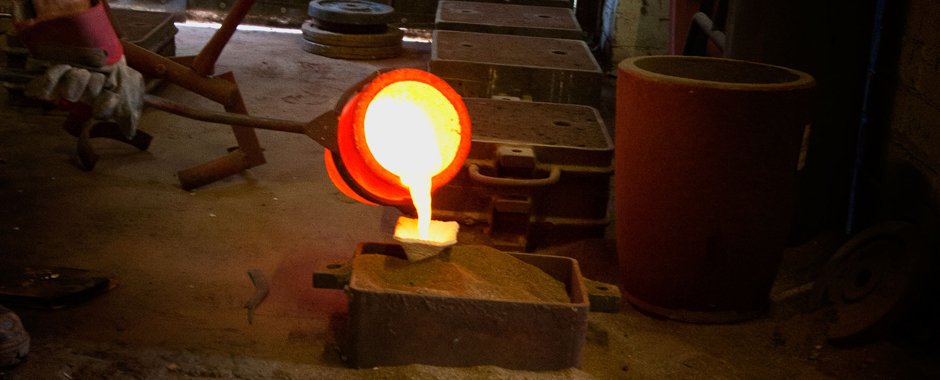
- At around 1,150°C, molten bronze alloy—typically 88% copper, 10% tin, and 2% zinc or silicon for durability—was poured into the cavity
- After cooling gradually over 48 hours, the ceramic shell was broken away, revealing the raw bronze casting
- Fettling, Welding & Assembly
Due to their scale, the trees were cast in sections—trunk, main branches, and secondary branches—to make handling and casting feasible. Bronzecraft’s skilled team then:
- Removed sprues, vents, and excess metal
- Welded sections together using matching bronze filler rods
- Ground and blended joins until they were virtually invisible
- Reinforced the interior with stainless steel supports to ensure long-term stability
- Patination: Bringing Bronze to Life
Freshly cast bronze has a bright, golden appearance; the rich, deep, textured finish we associate with heritage sculpture is created through patination—a chemical process developed and refined by Bronzecraft specifically for outdoor use.
- A controlled mixture of iron oxide, copper nitrate, and sulphides was applied while the metal was gently heated
- The reaction created natural-looking tones: deep browns, soft mossy greens, and subtle greys, mimicking aged timber and weathered metal
- Finally, multiple coats of microcrystalline wax were applied and buffed to seal the surface, protecting it from rain, frost, pollution, and UV damage
- Delivery & Handover
In late autumn 2007, the finished trees were carefully transported to Cambridge and delivered to the site. Bronzecraft did not carry out the installation itself; instead, the work was handed over to the restaurant’s appointed contractors, who arranged the bases and final positioning in line with the garden’s design.
Impact & Legacy: The Midsummer House Trees Today
More than 18 years later, the Midsummer House bronze trees remain a defining feature of the venue:
- Visual identity: They appear regularly in reviews, travel photography, and media coverage of the restaurant
- Material performance: Bronze has weathered beautifully, developing a deeper, richer patina without corrosion, cracking, or structural movement
- Symbolism: They represent endurance, growth, and the powerful link between nature and human craft
- Portfolio milestone: This high-profile commission firmly established Bronzecraft as a leading foundry for large-scale landscape bronze art—laying the groundwork for its formal incorporation as Bronzecraft Ltd in 2009 and the expansion of its services across the region.
Beyond the Trees: Bronzecraft’s Work for Cambridge University & Colleges
Following the success at Midsummer House, and after becoming a limited company in 2009, Bronzecraft began receiving regular, ongoing commissions from Cambridge University and its 31 colleges, as well as local councils and public art bodies. Bronze is the material of choice for these institutions because it lasts for 1,000+ years, requires minimal maintenance, and gains character rather than deteriorating with age.
Types of University & College Commissions
- Commemorative Statues & Busts
- Portrait busts of scholars, founders, and distinguished alumni
- Memorials marking major anniversaries, donations, or academic achievements
- Recent and past work includes pieces for Christ’s College, St John’s College, Clare College, and Gonville & Caius College, often working alongside Cambridge-based sculptors
- Architectural Bronze Details
- Bespoke gates, railings, plaques, lettering, crests, and finials
- Restoring historic bronze fittings on listed buildings, matching original 17th–19th century techniques
- New installations designed to blend seamlessly with existing heritage architecture
- Site-Specific Sculptures
- Garden and courtyard works: tree forms, abstract shapes, and motifs inspired by science, nature, and history
- Pieces for libraries, botanical gardens, and research centres such as the Sainsbury Laboratory
- Designs tailored to reflect each college’s identity and academic focus
- Restoration & Conservation
- Professional cleaning, repair, and repatination of existing bronze artworks that have faded or suffered damage
- Working closely with conservation officers and heritage architects to preserve the original character of every piece
Why Cambridge Continues to Choose Bronzecraft Ltd
- Proximity: Short travel times enable fast responses, site visits, and efficient logistics
- Heritage understanding: The team respects the architectural and historical context of the university and its surroundings
- Flexibility: Able to produce one-off bespoke works or small batches, adapting to individual requirements
- Quality assurance: Every commission comes with clear documentation, a guarantee, and detailed guidance for long-term care
- Local roots: As a Norfolk-based business, Bronzecraft supports the regional creative economy and builds long-term partnerships rather than one-off transactions
Public Bronze Art Across Cambridge & East Anglia
Since its formal incorporation in 2009, Bronzecraft Ltd has expanded its work beyond the university to serve the wider community. Its pieces can be found in public spaces throughout Cambridge and across East Anglia:
- City centre parks and squares: Tree sculptures, memorials, and decorative features that contribute to the city’s artistic landscape
- River Cam embankments: Water-resistant bronze works designed to withstand damp conditions and changing water levels
- Schools, museums, and churches: Plaques, religious symbols, and educational sculptures that mark local history and achievement
- Heritage trails: Contributions to the Cambridge Sculpture Trail and similar initiatives, helping to make art accessible to residents and visitors alike
The foundry also collaborates with independent artists, designers, and architects across the UK, turning creative concepts into permanent public art. Its portfolio includes wildlife bronzes, abstract forms, and custom installations for private gardens, estates, and commercial developments.
The Bronze Advantage: Why This Material Endures
Bronze is not chosen by accident—it is widely recognised as the ultimate material for outdoor and heritage art:
✅ Exceptional durability: Resists rust, rot, frost, and pollution; it actually stabilises and strengthens as it ages
✅ Timeless beauty: Develops a unique, living patina that deepens and evolves over decades
✅ Unmatched detail: Captures fine lines, texture, and natural forms far more precisely than stone, resin, or steel
✅ Long-term value: A single investment that lasts for centuries, with only occasional cleaning and rewaxing required
✅ Sustainable choice: Fully recyclable and uses high-grade, lead-free alloys, making it safe and environmentally responsible
The Process of Commissioning: From Idea to Completion
Whether you are planning a small plaque or a large landscape sculpture, Bronzecraft Ltd follows a clear, transparent process:
- Initial Consultation: Discuss your concept, required form, location, budget, and timeline
- Design & Quotation: Review sketches, models, or CAD files; provide a fixed, detailed quotation
- Model Refinement: Work with the artist or designer to ensure the master model is suitable for casting
- Casting: Select the most appropriate method—lost-wax or sand casting—based on complexity and scale
- Finishing: Remove excess material, weld sections, apply patination, and seal with protective wax
- Delivery & Handover: Arrange secure transport and hand over the finished work; installation can be coordinated separately or arranged via your chosen contractors
- Aftercare: Provide full instructions on how to maintain the bronze for generations
Looking Ahead: Preserving Bronze Heritage for the Future
Bronzecraft Ltd remains intentionally small and independent. In an era of mass production, it exists to protect and pass on the rare skills of traditional bronze casting, ensuring these ancient techniques survive and thrive for the next generation.
Its work in Cambridge is more than just metalwork—it is heritage in the making. Every piece cast adds to the city’s cultural identity, connecting its past with its present and future. The Midsummer House bronze trees are not just decorative features; they are proof that when vision meets true craftsmanship, something timeless is created.
Conclusion
The story of Bronzecraft Ltd and the 2007 Midsummer House bronze trees is a perfect example of how local expertise can deliver world-class results. From its Norfolk workshop, through its formal establishment as a limited company in 2009, to its ongoing work across Cambridge’s colleges and public spaces, the foundry has built its reputation on quality, care, and permanence.
Whether you are an artist, a college administrator, a business owner, or a private collector, choosing Bronzecraft Ltd means investing in tradition, durability, and artistry—just as Midsummer House did nearly two decades ago.
Bronzecraft Ltd Norfolk foundry, incorporated 2009, Midsummer House bronze trees 2007, Cambridge public bronze art, university bronze commissions, lost-wax casting UK, East Anglia sculpture foundry, bronze restoration Cambridge.