
TL;DR Hollow-cast bronze sculpture uses a hollow shell to reduce weight and material while retaining surface detail. This article outlines typical stages, common finishes and basic care so artists, galleries and commissioning clients know what to expect.
Hollow-cast bronze sculpture is a way of producing durable, lightweight works that keep fine surface detail. The approach can use investment (lost-wax) techniques or variations tailored to scale and budget. Below, you will find concise key points, a practical process overview, finishing options and answers to frequently asked questions to help with commissioning, conservation and workshop planning.
Key pointsHollow-Cast Bronze
- Hollow casting saves metal and reduces weight by creating a shell rather than a solid pour.
- Common approaches include modified lost-wax processes and shell casting adapted for size and complexity.
- Finishes range from chemical patination to wax or lacquer coatings, each affecting appearance and maintenance.
- Repairs and mechanical fixes are routine for hollow pieces, but access and design choices influence repairability.
The following sections explain these points in more detail and lead you through a typical workshop workflow, so you can discuss options with a foundry or prepare a commission brief.
Typical process and stages
Model, moulding and pattern preparation
Sculpture begins with a model in clay, polystyrene or 3D print. For hollow work, the model is often prepared in segments so internal gating and vents can be planned. Moulds are taken from the model to reproduce the piece in wax or a pattern material that will later be removed.
Wax assembly and gating
Wax sections are assembled into the final shape and fitted with gates and vents to allow investment and later metal flow. For hollow casting the wax may include ceramic or fibre cores to set internal cavity geometry. The gating layout, and the decision to make the piece in parts or as one assembly, influences chasing and seams later in the process.
Investment, burnout and shell building
The wax assembly is coated with successive ceramic or investment layers to form a rigid shell. Once the shell cures, the wax is melted or burned out, leaving a cavity for the metal. Shell thickness and material choice are adjusted to the alloy, pour temperature and piece scale.
Pouring and shell removal
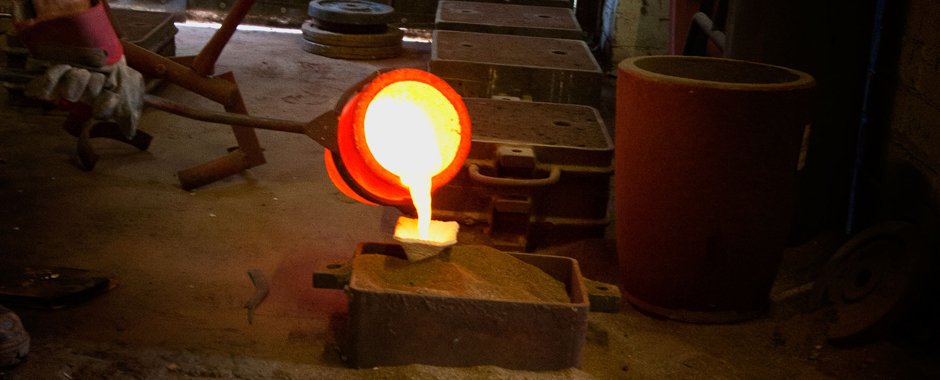
Molten bronze is poured into the cooled shell. For larger works pours may be staged, or ancillary cores used to control wall thickness. After cooling, the investment shell is removed and the cast sections are revealed. Careful handling is needed to avoid distortion while the metal is still warm.
Chasing, joining and hollowing adjustments
Cast parts are chased to remove gates and seams, then joined with welding or brazing. If internal cores or inserts were used, they may be removed at this stage through small access ports, with repairs made to restore the surface. The chasing stage also prepares the surface for the chosen finish.
Patination and final finish
Surface finishes are applied last. Chemical patination, mechanical textures, or applied pigments create the desired tone. Protective coatings such as microcrystalline wax or specialist lacquers can be used to limit corrosion and reduce maintenance requirements. The choice depends on the desired aesthetic and the intended display environment.
These stages are typical; individual foundries adapt methods for scale, compositional detail and whether the piece is a one-off commission or part of limited production.
Finishes, care and conservation considerations
Finishes affect appearance, tactile quality and long-term upkeep. Chemical patinas develop colour by reacting with the alloy surface and can be controlled to produce greens, browns or darker browns. Waxes and lacquers give a surface sheen and provide a sacrificial layer that can be renewed.
- For outdoor sculpture, choose finishes and protective coatings with corrosion resistance in mind.
- Indoor pieces may favour delicate patinas and lighter protective coatings to keep detail visible.
- Regular light cleaning, occasional re-waxing and inspection of joins will prolong life. Conservators may recommend tailored regimes for historic or high-value works.
For decision-making about finishes it can help to see worked examples and standard workflow notes.
FAQ
Wall thickness often varies with scale and function, but typical shell thicknesses may range from a few millimetres to several millimetres depending on alloy and structural needs.
Hollow pieces can be very robust if designed with internal bracing, appropriate wall thickness and secure joins; design decisions influence stiffness more than hollowness alone.
Outdoor finishes typically use durable patinas combined with protective coatings such as wax or specialist lacquers; maintenance intervals depend on location and exposure.
Yes, common repairs include welding, filling and re-patination; access for repair is considered during design so sections can be rejoined or openings used for internal work.
Timescales vary with size and complexity; a small commission might take weeks while larger, multi-part works can take several months from model to finish.
Summary and what to do next
Hollow-cast bronze offers a way to produce detailed, lighter sculptures while conserving alloy. Decisions about moulding approach, gating, shell thickness and finish should be made early so the workshop can plan joins and repair access. If you are preparing a commission brief or assessing conservation options, gather scale drawings, photos and intended siting so technical choices match the artwork and display conditions.
If you would like to discuss a commission or technical options with a foundry, Bronzecraft can advise on method selection and finishes. Contact Bronzecraft on +44 1953 459999 to arrange a conversation about a specific project.