
TL;DR Investment casting (lost-wax) delivers high-precision metal parts and fine-art castings with excellent surface finish and repeatable tolerances. This guide summarises the end-to-end process, key material and design factors to check before you commission parts, typical lead times and finishing options, and the questions to ask a foundry to ensure the result meets functional or aesthetic requirements.
Investment casting is widely used when close tolerances, complex geometry and fine surface detail are priorities. Whether you are specifying components for engineering assemblies or commissioning a sculptural piece, understanding the process, typical constraints and finishing choices helps you get accurate, consistent outcomes and sensible commercial terms.
When investment casting is the right choice
Use investment casting when parts need accurate dimensions, thin walls, internal features or high-quality surfaces that minimise machining. The technique suits repeat runs where tooling costs can be amortised, and it is often chosen for bronze artworks and precision metal components alike.
This section explains the use cases so you can judge whether the process aligns with your functional tolerances, batch sizes and budget considerations.
How the lost-wax process works, step by step
The method begins with a pattern, typically made from wax, that represents the final shape. That pattern is invested in a ceramic shell, the wax is removed and molten metal is poured into the cavity created by the wax. After the metal cools, the shell is broken away and the castings are cleaned and finished. The sequence below highlights the phases you will meet during a commission.
1. Pattern and tooling
A master pattern is modelled in wax or produced by 3D printing in wax-compatible materials. For repeat runs, a master is used to produce multiple wax patterns on a gating tree. Tooling options influence unit cost and lead time, so confirm expected volumes before finalising tooling choices.
2. Assembly and investment
Wax patterns are assembled onto a runner system and dipped in refractory slurry to build a ceramic shell. The shell dries to a hard casing that can withstand molten metal. Shell thickness and refractory grade are chosen to match metal temperature and part geometry.
3. Dewaxing and firing
Wax is removed by heating, leaving an empty ceramic cavity. The shell is then fired to remove residues and to reach the correct thermal conditions for pouring. Care at this stage affects internal quality and surface integrity.
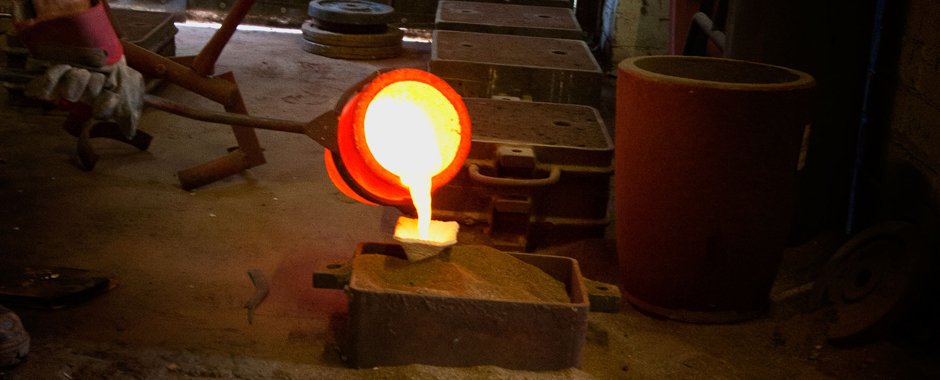
4. Pouring and solidification
Molten metal is poured into the hot shell. Solidification pattern, metal choice and gating strategy are controlled to mitigate shrinkage, porosity and inclusions. For critical parts, foundries use risers and feeders to ensure sound fills.
5. Shell removal and finishing
Once cooled, the ceramic shell is removed by mechanical or chemical means. Castings are cut from the runner, cleaned and inspected. Further finishing can include machining, chasing, welding, patination or coating depending on specification.
Materials and precision considerations
Investment casting supports a wide range of alloys. Bronze, stainless steels, aluminium alloys and specialist superalloys are commonly used. Each material has its own shrinkage characteristics, melting range and finishing behaviour, which affect tolerances and surface finish.
Discuss expected tolerances with your foundry at the design stage. Typical achievable tolerances and surface finishes depend on part size, wall thickness and alloy. When functional fit is critical, a modest allowance for machining or post-cast finishing is prudent.
Design for investment casting: features to check
Design choices influence castability and cost. Key points to verify during design reviews include wall thickness, draft angles, fillets at internal corners, gate and riser placement and the avoidance of isolated high‑mass sections that can cause shrinkage defects.
- Maintain consistent wall thickness where possible to avoid hot spots and uneven solidification.
- Include generous fillets at internal corners to reduce stress concentrations and porosity risk.
- Design for simple gating and feeding routes so the foundry can control directional solidification.
- Plan for any post-cast machining or assembly features that require tighter tolerances.
Early collaboration with the foundry often reduces iterations and cost. Many workshops, including those offering precision bronze work, can advise on small design changes that improve castability without altering function.
Quality checks and finishing options
Quality control typically includes dimensional inspection, X‑ray or ultrasonic testing for internal defects when required, and visual or metallurgical checks. Ask whether the foundry can provide inspection certificates and reports for critical components.
Common finishes for artistic and industrial parts include machining to final dimensions, shot blasting for a matt texture, hand chasing to restore fine detail, chemical patination for bronze, and protective coatings for corrosion resistance. Select finishing routes that align with function and long‑term maintenance.
Typical lead times and cost drivers
Lead times depend on tooling choices, batch size and finishing. Small prototype runs made from 3D‑printed wax patterns may be faster but cost more per unit, while larger batches justify dedicated tooling and lower unit costs. Allow additional time for inspection and any required rework.
Primary cost drivers are tooling, material selection, finishing and inspection level. For budget planning, obtain quotes that separate tooling and per‑unit pricing so you can evaluate options such as rapid prototypes, pilot runs and full production batches.
Who should consider investment casting
This route is a good fit for engineering teams needing repeatable precision parts with complex geometry, and for sculptors or studios commissioning bronze or other alloy castings that require fine surface detail and a premium finish. It can also suit design professionals producing components where minimal post‑processing is desirable.
Consider alternatives, such as sand casting for large low‑detail parts or machining for single items when material waste and machining time are acceptable. The right choice depends on geometry, quantity and finish requirements.
What to ask a casting partner
When vetting potential foundries, cover capability, experience with your chosen alloy, inspection practices and lead times. Also clarify responsibilities for tooling, who owns tooling for repeat runs, and how variations or defects are handled contractually.
For a practical checklist and evaluation questions, see: Choosing An Investment Casting Company: Key Questions – https://www.bronzecraft.co.uk/choosing-an-investment-casting-company-key-questions/
FAQ
Tolerances from investment casting are often close to finished dimensions for many features but vary by alloy and size. Fine tolerances sometimes require post‑cast machining.
Investment casting is efficient for medium to large batches where tooling cost is spread across units, but small runs are practical using printed or soft tooling at a higher unit price.
Yes. Investment casting can form hollow sections and internal features using cores or soluble patterns, but design and gating must account for these elements to avoid defects.
Related guides
- Choosing An Investment Casting Company: Key Questions – https://www.bronzecraft.co.uk/choosing-an-investment-casting-company-key-questions/
Summary and next steps
Investment casting provides a reliable route to precise, high‑quality metal parts when the geometry and finish demand it. Start with clear specifications for tolerances, material and finish, then engage a foundry early to align tooling and inspection expectations. Early collaboration reduces surprises, shortens lead times and often lowers overall cost.
If you need practical help scoping a first prototype or comparing finishing options for bronze work, speak to a foundry experienced in both artistic and precision casting to ensure the chosen approach meets technical and aesthetic goals.