
TL;DR Start by listing nearby casters and narrowing them by services offered, technical capability and quality controls. Inspect examples, ask targeted questions about process and insurance, and compare realistic costs and lead times before deciding. See the related guides for a direct comparison checklist and what to expect from local suppliers.
Choosing a casting company near you is a practical task that combines technical checks with straightforward due diligence. This article walks through the key considerations, which services matter for different projects, how to assess capability and quality, realistic cost and timeline expectations, and quick next steps so you can make contact with confidence.
Key considerations when choosing a local caster
Begin with the project’s requirements. Is the job a one-off fine-art bronze, a restoration requiring conservation expertise, or a short run of precision parts? The answers will determine which specialists and capabilities you need to prioritise. Keep a note of required alloys, surface finishes and any dimensional tolerances that matter to you.
Also factor in practical constraints: delivery or collection, how quickly you need completed work, and whether you require on-site visits or remote quotations. Having this information to hand will make supplier replies faster to evaluate and reduce the need for repeat clarification.
With those priorities set, you can use them as filters to compare likely suppliers. The next section explains which specific services to look for and why they matter for different kinds of work.
The services to look for locally
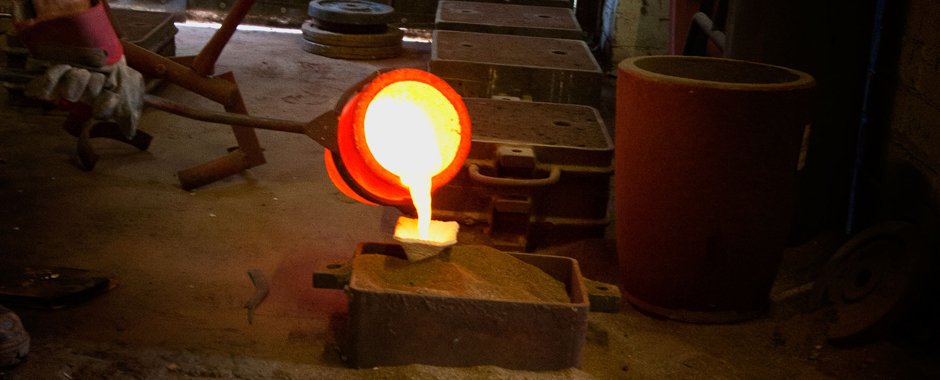
Local foundries do not all offer the same services. For art and heritage work you may need lost-wax (investment) casting and experienced patination; for industrial prototypes you may value sand casting, pattern-making and machining. A reputable local company will clearly describe the processes they offer and the kinds of projects they undertake.
Look for explicit mentions of related services that affect the final outcome: pattern or mould-making, surface finishing, welding and fabrication, colour patination, and any finishing or machining that brings castings to final specification. If you need conservation or restoration, confirm the supplier has experience with museum-standard techniques and documentation.
Knowing which services you need makes it easier to rule suppliers in or out and to match the right expertise to the task. Next, we cover how to assess technical capability and equipment.
Assess technical capability and equipment
Technical capability matters more than marketing. Ask about the specific processes used, the maximum and minimum part sizes they can handle, typical tolerances and the foundry’s approach to complex detail. A supplier who can explain why they would choose one process over another is usually a reliable partner.
Check for details such as temperature control, pattern and mould-making facilities, in-house machining, and finishing bays. For projects where surface appearance or fine detail matters, ask to see photographs or physical samples of similar work; this gives a far clearer impression than general claims.
Once you have technical evidence, the next priority is quality assurance, safety and compliance, which we cover below.
Quality assurance, certification and insurance
Quality controls reduce the risk of surprises. Ask whether the company uses inspection practices such as dimensional checking, photographic records, and component testing where applicable. For commissioned artwork, documentation of materials and process can be important for provenance and conservation records.
Confirm that the foundry carries appropriate public liability and employers’ insurance and that they operate safe systems for handling molten metal and hazardous materials. Professional suppliers will be able to provide insurance details and, where relevant, certificates of conformity or material test reports.
Having confirmation of quality and insurance should give you confidence to arrange a sample inspection or workshop visit, which is discussed in the next section.
Viewing samples and visiting the workshop
Whenever feasible, inspect samples or visit the workshop. Seeing finished pieces and the workshop environment tells you about craft standards, cleanliness, and how the team works. If an in-person visit is not possible, request high-resolution photographs of finished work, ideally with a ruler or scale in the image so you can judge detail and finish.
Use a visit to ask for specific examples of similar work and to meet the technicians who will handle your project. This discussion often reveals practical experience, problem-solving skills and how well the supplier communicates , all useful predictors of a smooth collaboration.
After viewing samples, you will be ready to compare costs and lead times realistically; the next section explains how to do this fairly.
Costs, timelines and realistic expectations
Price is important but should be weighed against capability and quality. Obtain written quotations that break down costs: materials, labour, process-specific charges (for example pattern or tooling), finishing, and any subcontracted work. A clear quotation makes it easier to compare like-for-like between suppliers.
Lead times vary with process complexity and current workload. Ask for a realistic production timetable with key milestones: tooling or pattern completion, casting, finishing and delivery. Where possible, build a contingency into your schedule for finishing and unforeseen rework.
Compare quotes not only on price but on what is included. A slightly higher price that includes finishing to your specification, insurance and clear documentation is often better value than a low quote that excludes essential items.
Related guides
FAQ
Provide clear details of material, approximate dimensions, and the finish you expect. If you can share sketches, photographs or CAD files, the supplier can give a more accurate price. Ask for a written quote that itemises materials, labour and any tooling or finishing fees.
Ask which casting processes they use, whether they have done similar projects, typical lead times, insurance details, and how they document materials and finishes. If conservation or exact colour patination matters, ask for evidence of past work.
Some local foundries specialise in restoration and work to museum or conservation standards. If you need restoration, request examples and ask how they approach documentation, materials matching and reversible or sympathetic treatments.
Ask to see samples with similar scale and complexity. Check that surfaces are consistent, that edge detail is crisp, and that patination is even and matches your brief. Photographs with a scale ruler help when an in-person visit is not possible.
Include a clear brief, dimensions, photographs or drawings, preferred materials and finish, any required tolerances, and your deadline. Also state whether the supplier must provide handling, packing and transport; these items are often charged separately.
Many local suppliers offer collection and delivery for an extra fee. Check that transit is insured and ask how fragile or large items are packed. If you require specialist transport this should be stated up front so it can be included in the quote.
What to do next
Make a short brief that lists material, size, desired finish, deadline and any images or drawings. Send it to two or three local suppliers and ask for written quotes with a breakdown of costs and lead times. Where possible, arrange to view samples or visit the workshop before committing.
If you would like a local recommendation, Bronzecraft is based at Unit 1, Bunns Bank Industrial Estate, Attleborough, Norfolk, NR17 1QD and serves clients across the region. Call +44 1953 459999 to discuss a brief, request examples or arrange a visit.