
Cost in an Art Foundry — How Price Is Arrived At: Bronzecraft Ltd
When commissioning bronze sculpture, heritage pieces, demonstration castings or architectural metalwork, clients often ask exactly how the final price is worked out. At Bronzecraft Ltd — specialist art and heritage foundry based in Attleborough, South Norfolk — pricing is fully transparent and built step‑by‑step from the work actually needed. Unlike heavy‑industrial plants that optimise purely for volume, we calculate costs around quality, detail, skill and one‑off or small‑batch craft — typical of lost‑wax ceramic‑shell casting used for fine art and heritage accuracy.
Cost Is Built From Clear, Measurable Elements
Every quotation combines these core components — nothing hidden, no arbitrary mark‑ups. This is how we arrive at a fair and accurate figure:
- Pattern and mould‑making — the foundation of detail retention
- Materials: wax, ceramic shell, bronze alloy and consumables
- Skilled labour across every stage
- Energy, equipment use and overheads
- Post‑casting work: cleaning, assembly, chasing and finishing
- Optional extras: patina, engraving, special finishes, packing and delivery
Pattern and Mould‑Making — First and Most Influential Step
Whether starting from a physical model, clay original, or 3D scan and print, creating accurate patterns and robust moulds sets the whole project quality and cost level. Simple forms need fewer hours and fewer ceramic layers; complex sculptures with fine texture, deep undercuts, multiple parts or very thin sections demand more hand‑work and slower, careful build‑up. At Bronzecraft, this stage often represents between 20 % and 35 % of total cost because poor moulding wastes everything that follows.
We work closely with Hannam Polishing Services Ltd next door — early discussions about intended finish mean patterns are shaped so detail survives both casting and final preparation. This integration avoids expensive re‑work later.
Materials — Weight, Alloy and Process Type
Bronze itself is a significant, market‑linked element — typically 30 % to 45 % of total price. We use consistent, high‑quality copper‑tin alloys suitable for outdoor durability and fine finish. Calculation includes:
- Net finished weight
- Plus gating, runners and sprue system — necessary but removed later
- Plus typical melting and handling losses
- Current price of metal ingots, which varies with global supply
Smaller items often cost more per kilogram because setup and handling are fixed regardless of size — whereas editions or multiple pieces spread pattern and shell‑building expense across more units. Wax, ceramic slurries, refractory grains, binders and release agents are also carefully sourced and factored — premium materials help deliver consistent, clean detail and fewer rejects.
Labour — The Largest Single Factor in Specialist Foundries
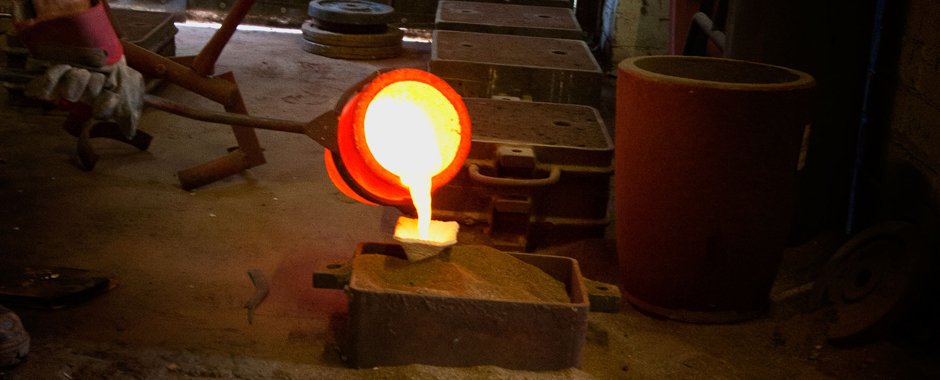
Unlike mass‑production lines, lost‑wax ceramic‑shell casting is highly labour‑intensive and skill‑driven — and this is where a specialist art foundry differs most from heavy industry. Every stage — shell‑dipping, drying control, dewaxing, firing, pouring, break‑out, cleaning and chasing — requires experience. A simple piece may take fewer hours; detailed or multi‑part sculpture can involve many skilled days. At Bronzecraft, we do not rush these stages — rushing risks losing detail or creating structural faults that cost more to repair or re‑cast.
Our pricing reflects appropriate hourly rates for qualified artisans, consistent with UK craft standards and the specialist nature of work such as the bronze articles and demonstration castings we supplied for BBC’s Human 2025 series — where accuracy and visual quality were essential.
Energy, Equipment and Overheads
Operating a craft‑scale foundry still requires purpose‑built infrastructure — though not the huge plant of heavy‑industrial facilities. Costs include:
- Furnace and kiln energy use
- Ventilation, extraction and safety systems
- Depreciation and maintenance of mould‑making, casting and finishing gear
- Workshop overheads, insurance, compliance and site running costs
These are allocated fairly per job — small‑batch operation still needs reliable, safe and compliant facilities, but without the heavy‑volume overheads that suit mass‑produced goods only.
Post‑Casting Work — Cleaning, Assembly and Finishing
Removing shell residue, cutting away sprues, joining sections, smoothing seams and restoring fine definition — known as chasing — is a large part of the value. This is where our partnership with Hannam Polishing Services Ltd becomes central: blasting, grinding, polishing grades — mirror, bright, satin or DP1 — and patina are quoted clearly according to what the client requires.
For heritage‑style or documentary‑use pieces, finishes are matched to period look or camera‑readiness, adding further controlled hours. For engineering‑grade or decorative items, simpler or uniform finishes can reduce cost while still meeting purpose.
How Volume and Service Level Change Price
Bronzecraft offers three clear service models, each calculated differently — so clients choose exactly what fits:
- Full commission: pattern through to finish — most complete and labour‑heavy
- Cast‑only: using client‑supplied patterns or waxes — lower, but still requiring quality control and mould‑making
- Limited edition / multiple runs: pattern and mould costs spread over several pieces — reduces per‑unit price
One‑off bespoke sculpture or unique demonstration items — like those for BBC filming — are naturally priced higher per‑piece than repeated runs, because every stage is treated individually and carefully.
What Makes Bronzecraft’s Pricing Different
Because we are a specialist art and heritage foundry — not a heavy‑industrial plant — our costing model is built around quality, detail and repeatable accuracy, not maximum output per hour. This is why we are trusted by artists, heritage bodies, architectural projects and producers needing consistent, true‑to‑design results — from Ros Newman legacy works to the Human 2025 and planned Turkey‑filming bronze‑antiquity contributions.
We also quote clearly and discuss scope before starting — so there are no surprises. If a design or finish level changes, we explain exactly how that affects cost and adjust openly.
Summary — Cost Equals Value
Price in an art foundry is never just “per‑kilo metal”. It is the sum of careful pattern‑making, premium materials, experienced craft labour, controlled energy and equipment use, and high‑quality finishing — all organised to preserve detail and integrity. At Bronzecraft Ltd in Attleborough, cost is arrived at transparently and logically — and that cost represents the difference between ordinary castings and pieces that last, retain definition and serve their purpose for generations.
For further information or to discuss how your project will be costed, please contact us directly — we will explain each element and recommend the right service level for your needs.