
Introduction
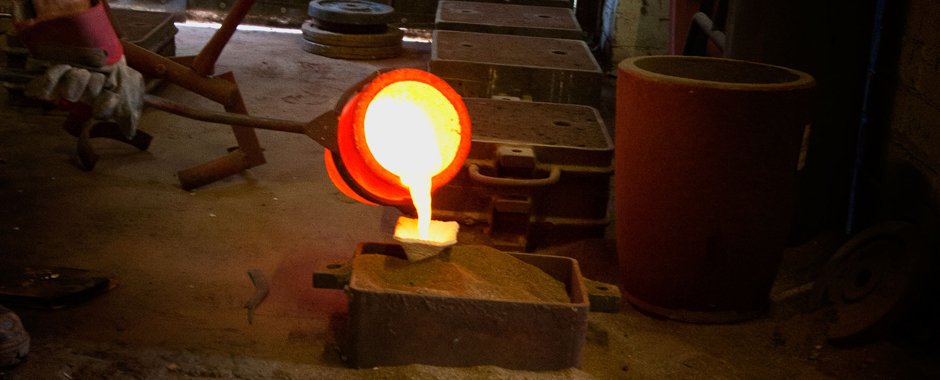
For centuries, lost wax casting has been the preferred method for producing highly detailed metal components. From fine art bronzes and jewellery to aerospace components and industrial castings, the process has remained fundamentally unchanged: create a wax pattern, build a ceramic shell around it, remove the wax, and pour molten metal into the cavity.
Today, additive manufacturing is transforming foundry operations. One of the most significant developments is the use of PolyCast™ filament for direct investment casting patterns. This innovative material allows foundries, artists, engineers, and manufacturers to produce highly accurate casting patterns directly from CAD files without the need for wax injection tooling.
As production demands become increasingly complex, PolyCast offers a practical and cost-effective alternative to traditional wax patterns, reducing lead times, eliminating tooling costs, and enabling rapid design iteration.
This article explores how PolyCast filament works, its advantages over conventional lost wax methods, best practices for successful casting, and why it is becoming an increasingly important material for modern investment casting foundries.
What Is PolyCast Filament?
PolyCast is a specialised 3D printing filament designed specifically for investment casting applications. Developed to mimic many of the characteristics of casting wax, it is formulated to burn out cleanly from ceramic shells or plaster investment moulds.
Unlike standard PLA, ABS, PETG, or engineering polymers, PolyCast is engineered to leave minimal ash residue during burnout, reducing the risk of casting defects.
The material is typically printed using standard FDM (Fused Deposition Modelling) 3D printers and can be processed using equipment already found in most foundries.
Key characteristics include:
- Low ash content
- Clean burnout properties
- Excellent surface finish
- High dimensional accuracy
- Compatibility with standard ceramic shell systems
- Suitable for bronze, aluminium, brass, silver, gold, steel, and iron castings
PolyCast effectively bridges the gap between additive manufacturing and traditional foundry processes.
The Traditional Lost Wax Process
To understand the value of PolyCast, it is useful to review the traditional lost wax workflow.
Step 1: Pattern Creation
A wax pattern is produced, often by injecting wax into a metal die.
Step 2: Assembly
Patterns are attached to a wax sprue system to create a casting tree.
Step 3: Shell Building
The wax assembly is repeatedly dipped into ceramic slurry and coated with refractory sand.
Step 4: Dewaxing
The shell is heated, allowing wax to melt and drain away.
Step 5: Burnout
The shell is fired to remove any remaining wax residues.
Step 6: Casting
Molten metal is poured into the cavity.
Step 7: Finishing
The shell is removed and the casting is cleaned, chased, welded, and finished.
While highly effective, traditional wax production often requires expensive tooling and significant lead times.
The Limitations of Wax Tooling
Wax injection tooling remains one of the largest expenses in investment casting production.
Challenges include:
- High Initial Costs
- Complex dies can cost thousands of pounds or dollars.
- Long Lead Times
- Tool manufacture can take weeks or months.
- Limited Design Flexibility
- Even minor design changes often require tooling modifications.
- Small Batch Inefficiency
- Producing a handful of castings may not justify tooling investment.
- Prototype Constraints
Rapid product development becomes difficult when new tooling is required for every revision.
These limitations have encouraged foundries to explore additive manufacturing alternatives.
How PolyCast Changes the Process
PolyCast eliminates the need for traditional wax tooling.
Instead of producing a wax pattern from a die, the pattern is printed directly from a CAD model.
The workflow becomes:
- Design component in CAD.
- Slice model for FDM printing.
- Print in PolyCast filament.
- Attach gates and sprues.
- Build ceramic shell.
- Burn out pattern.
- Pour metal.
- Finish casting.
This dramatically reduces production time and cost.
Advantages of PolyCast for Investment Casting
1. Tool-Free Production
Perhaps the greatest advantage is the elimination of pattern tooling.
Without expensive moulds:
- Prototype costs drop significantly.
- Design changes become easy.
- Development cycles accelerate.
- One-off castings become economical.
This is particularly valuable for artists, sculptors, aerospace manufacturers, motorsport engineers, and product designers.
2. Rapid Prototyping
Design iterations can be produced within hours.
Instead of waiting weeks for tooling, engineers can:
- Print revised patterns overnight.
- Test casting performance.
- Make adjustments immediately.
The result is faster product development and reduced time to market.
3. Complex Geometry
Traditional wax injection has limitations.
PolyCast enables:
- Internal channels
- Lattice structures
- Organic forms
- Topology-optimised components
- Lightweight geometries
Many of these designs would be impossible or prohibitively expensive using conventional tooling.
4. Reduced Inventory
Foundries no longer need to store large quantities of tooling.
Instead:
- CAD files become digital inventory.
- Patterns are produced on demand.
- Storage requirements are reduced.
This digital workflow supports modern manufacturing strategies.
5. Cost Efficiency for Short Runs
For low-volume production, PolyCast can significantly reduce overall costs.
Examples include:
- Sculptural bronze work
- Heritage restoration
- Bespoke engineering components
- Architectural metalwork
- Motorsport components
- Medical devices
Small production runs become commercially viable.
Burnout Characteristics
Successful investment casting depends on clean pattern removal.
PolyCast has been formulated to:
- Expand minimally during burnout.
- Reduce shell cracking.
- Leave very low residue.
- Produce cleaner mould cavities.
Typical burnout schedules vary between foundries but generally involve gradual heating to prevent thermal shock.
Many foundries report successful burnout temperatures between:
- 700°C and 900°C
depending on shell composition and casting alloy.
Surface Finish Considerations
One concern with FDM-printed patterns is layer lines.
Several techniques improve surface quality:
Optimised Print Settings
Using:
- Small layer heights
- Fine nozzle diameters
- Slower print speeds
can significantly improve finish.
Solvent Smoothing
PolyCast supports smoothing processes that reduce visible layer lines.
Surface Coatings
Foundries often apply:
- Wax coatings
- Fillers
- Primer systems
before shell building.
The resulting cast surfaces can closely rival conventional wax patterns.
PolyCast Versus PLA
Many newcomers attempt investment casting using standard PLA filament.
Although possible, PLA presents several problems:
- Property| PolyCast| PLA
- Burnout Quality| Excellent| Poor
- Ash Residue| Very Low| Higher
- Shell Cracking Risk| Lower| Higher
- Investment Casting Design| Purpose Built| Not Designed
- Surface Finish| Superior| Standard
- Reliability| High| Variable
PolyCast is specifically engineered for foundry use, making it the preferred choice.
Applications in Art Foundries
Artists are among the biggest beneficiaries of PolyCast technology.
Benefits include:
Direct Digital Sculpting
Artists can:
- Sculpt digitally.
- Print directly.
- Cast without mould production.
Scale Flexibility
Models can be resized instantly without creating new tooling.
Reproduction Accuracy
Fine details are faithfully preserved from digital design to final casting.
Faster Project Completion
Lead times are significantly reduced.
For bronze sculpture foundries, this capability is transforming production workflows.
Applications in Engineering
Engineering sectors increasingly utilise PolyCast for:
- Aerospace Components
- Complex geometries can be cast without dedicated tooling.
- Motorsport Parts
- Rapid development cycles are supported.
- Industrial Equipment
- Replacement components can be produced from CAD files.
- Research and Development
- Functional metal prototypes can be manufactured quickly.
The combination of additive manufacturing and investment casting provides a powerful route to metal part production.
Best Printing Practices
To maximise casting success, foundries should follow several guidelines.
Use High-Quality Printers
Dimensional accuracy matters.
Reliable machines produce better patterns.
Optimise Layer Height
Smaller layer heights improve:
- Surface finish
- Dimensional accuracy
- Casting quality
Maintain Consistent Extrusion
Avoid:
- Under-extrusion
- Voids
- Stringing
These defects may transfer into the ceramic shell.
Design for Casting
Good casting principles remain essential:
- Adequate wall thickness
- Proper gating
- Controlled metal flow
- Suitable venting
PolyCast improves pattern production but does not replace sound foundry practice.
Shell Building Considerations
Most ceramic shell systems used with wax patterns are compatible with PolyCast.
However, foundries should:
- Ensure complete drying between coats.
- Avoid trapped moisture.
- Monitor shell thickness carefully.
- Validate burnout schedules.
A controlled shell-building process remains critical to casting success.
Sustainability Benefits
PolyCast can also support more sustainable manufacturing.
Benefits include:
- Reduced Waste
- Only required patterns are printed.
- Lower Inventory Requirements
- Physical storage is minimised.
- Digital Manufacturing
- Components can be produced on demand.
- Reduced Tooling Consumption
- Fewer dies and moulds need manufacturing.
These factors contribute to more efficient resource utilisation.
Future of Digital Investment Casting
The foundry industry is undergoing significant transformation.
Key trends include:
- Digital workflows
- CAD-driven manufacturing
- On-demand production
- Rapid prototyping
- Distributed manufacturing
PolyCast sits at the intersection of these trends.
As printers continue improving in:
- Accuracy
- Speed
- Material consistency
the use of printed investment casting patterns will continue to expand.
Many experts predict that additive manufacturing will increasingly complement, rather than replace, traditional wax pattern production.
For high-volume production, wax tooling will remain important. However, for prototypes, short runs, custom work, and complex geometries, PolyCast offers substantial advantages.
Conclusion
PolyCast filament represents one of the most important developments in modern investment casting. By enabling direct production of casting patterns from digital designs, it removes many of the traditional limitations associated with wax tooling.
- No tooling costs
- Faster lead times
- Greater design freedom
- Improved prototyping capability
- Reduced inventory requirements
- Efficient low-volume production
As additive manufacturing continues to mature, PolyCast is helping foundries embrace a more flexible, responsive, and digitally connected future.
Whether producing bronze sculptures, aerospace components, architectural castings, motorsport parts, or bespoke industrial products, PolyCast provides a practical and proven route to high-quality investment castings without the constraints of traditional wax pattern production.
The future of investment casting is increasingly digital—and PolyCast filament is playing a key role in that evolution.This version is optimized around search terms such as PolyCast filament, investment casting, direct investment casting, lost wax alternative, 3D printed casting patterns, foundry 3D printing, burnout filament, bronze casting, and digital foundry manufacturing.