Artist profile
Figurative sculpture · Plaster to bronze · Cambridge and St Ives
Christopher Marvell is a British figurative sculptor born in 1964, known for pared-back bronze animals, birds, heads and human figures. He grew up in Clacton, studied at Newcastle University from 1982 to 1986 and is based near Cambridge, with a longstanding connection to St Ives. Working through drawing, maquettes and plaster, Marvell reduces familiar subjects to expressive silhouettes, textured surfaces and emblematic forms.
Bronzecraft has a longstanding working relationship with Christopher Marvell, helping to translate the character of his sculptural models into bronze. This profile covers his background, artistic language, working method, recurring subjects, selected works and the foundry decisions involved in preserving his marks in metal.
Christopher Marvell at a glance
- Full name
- Christopher Marvell
- Born
- 1964, United Kingdom
- Grew up in
- Clacton, Essex
- Nationality
- British
- Profession
- Figurative sculptor and draughtsman
- Based near
- Cambridge, England
- Education
- Newcastle University, 1982–1986
- Principal materials
- Plaster, bronze, pencil and paper
- Known for
- Bronze birds, dogs, owls, hares, heads and human figures
- Edition format
- Small numbered editions, with the size determined work by work
- Creative partner
- Painter Elaine Pamphilon
Who is Christopher Marvell?
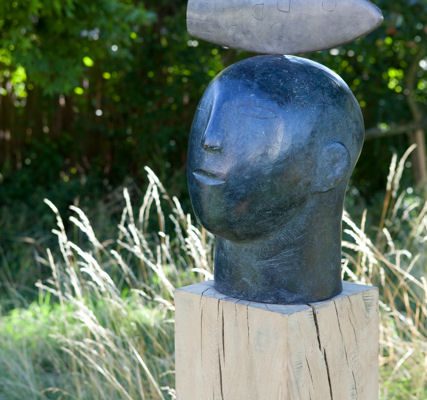
Christopher Marvell is a contemporary British sculptor whose animals and human figures sit between recognisable representation and modern abstraction. His subjects are familiar—dogs, birds, owls, hares, heads and standing people—but he removes unnecessary detail so that posture, silhouette and surface carry the meaning.
Marvell was born in Britain in 1964 and grew up in Clacton, on the Essex coast. From 1982 to 1986 he studied at the University of Newcastle upon Tyne. After university he moved to Cambridge and worked at Fulbourn Manor alongside artist and designer Marjorie Townley. These biographical details are documented in his Everard Read biography.
He later established his practice near Cambridge. A 2023 interview describes the home he shares with painter Elaine Pamphilon as a converted former pub outside the city, with Marvell’s light-filled sculpture studio at the end of the garden. The couple also lived for many years in St Ives before returning to Fulbourn, and Cornwall remains an important part of their artistic outlook. Their shared practice is active rather than incidental: each looks critically at the other’s work, and Marvell has said that experiments with colour and patination have responded to Pamphilon’s palette. Read the Varsity studio interview.
What defines Christopher Marvell’s sculptural style?
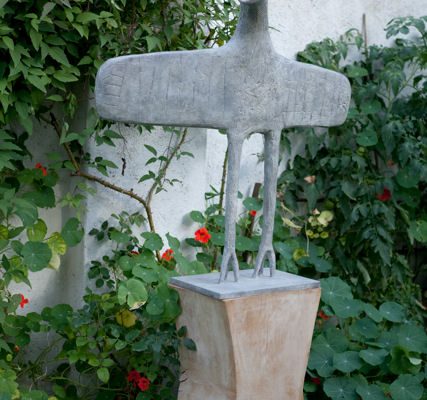
Marvell’s sculpture is figurative without being conventionally descriptive. Anatomical detail is simplified so the eye attends to the arc of a back, the tilt of a head, the spread of a wing or the planted weight of a standing figure.
Five qualities recur across his work:
- Emblematic form. A sculpture suggests a type or emotional state rather than illustrating one particular animal or person.
- Economy of detail. Marvell removes features that distract from the whole shape while retaining enough information for the subject to remain legible.
- Modelled surfaces. Irregularities and hand-made marks keep the energy of the plaster model visible in the finished bronze.
- Strong silhouettes. Birds, dogs and figures can be read at a distance before their smaller surface details become apparent.
- Humour and pathos. Awkwardness, dignity, watchfulness and vulnerability can coexist in a single pose.
“They’re just a head, just an owl, just a dog. They are emblematic: shapes, forms, and emotions.”
Christopher Marvell, quoted by 8 Holland Street
The apparent simplicity is deliberate. A heavy bronze bird can still suggest imminent movement; a dog reduced to a few strong planes can retain an alert personality; a monumental figure can feel both dignified and exposed.
From drawing and plaster to bronze: Christopher Marvell’s process
An idea may begin as a drawing, become a three-dimensional maquette and then be resolved in plaster before being translated into bronze. A published 2021 exhibition text describes this progression, while Marvell’s official website shows that drawing remains a substantial practice in its own right.
1. Drawing and observation
Drawing allows Marvell to search quickly for line, balance and character. His daily observation of people, animals and landscape provides a store of shapes that can later become sculpture.
2. Building a maquette
The idea is tested as a small three-dimensional model. A maquette reveals whether a silhouette works from several viewpoints and whether the apparent weight of the subject feels convincing.
3. Resolving the plaster model
Plaster fixes the sculpture’s proportions and records the marks that give its surface energy. Marvell can revise a curve or rebuild a section repeatedly until the form appears direct and inevitable.
4. Mould-making
A mould records the completed model. Its accuracy is essential because every transition, deliberate irregularity and worked passage must remain legible in the wax and finished bronze.
5. Producing and chasing the wax
The mould produces a wax replica. Foundry craftspeople repair seams and minor faults while protecting the purposeful marks inherited from Marvell’s model.
6. Gating, investment and burnout
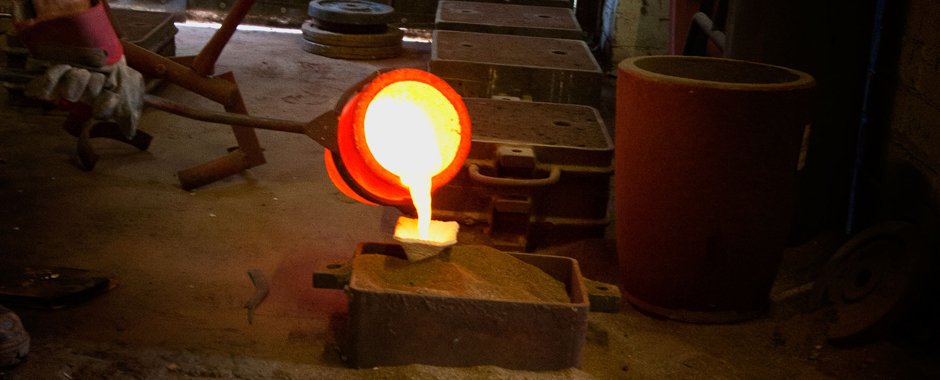
Wax channels are attached to control the later flow of bronze and the escape of air. The assembly is surrounded by heat-resistant investment; during burnout, the wax leaves a cavity in the mould.
7. Casting the bronze
Molten bronze fills the space previously occupied by wax. Larger or structurally complex works may be cast in several sections so that metal flow and wall thickness can be controlled.
8. Assembly, chasing and patination
After casting, feeds are removed and sections are welded where required. Metal chasing restores continuity across the surface. Controlled heat and chemicals then create the patina, giving the sculpture colour and tonal depth.
Christopher Marvell’s bronze-casting priorities
Marvell’s published comments, finished sculpture and Bronzecraft’s foundry experience point to several recurring priorities.
Preserving the artist’s marks
Technical finishing must not make the bronze mechanically smooth. The foundry distinguishes intentional plaster texture from mould seams, wax faults and casting artefacts so that necessary corrections do not erase Marvell’s hand.
Protecting the silhouette
Because the larger form carries so much expression, sectioning and assembly must preserve the exact angle of a limb, wing, head or supporting base. A small alignment error can change the balance of the whole work.
Using lost wax for complex form
Lost-wax casting is well suited to sculptures with undercuts, close-set elements and textured surfaces. It gives the foundry control over the translation from model to wax and from wax to bronze. For a detailed technical account, see Bronzecraft’s guide to bronze-casting techniques.
Patina as part of the composition
Colour is not merely decorative. Patina can separate adjacent planes, deepen shadow, connect bronze to an oak base and change the apparent weight or mood of a sculpture. Marvell’s more recent colour experiments have also been discussed in relation to Elaine Pamphilon’s painting palette.
Small, work-specific editions
There is no universal edition size. Published works include editions of two, three, five and seven as well as unique sculptures. Collectors should check the number marked on the cast and request documentation for the individual work.
Themes and selected works
Birds and owls
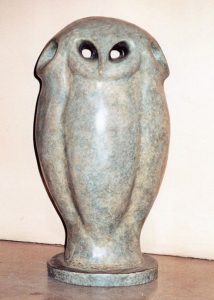
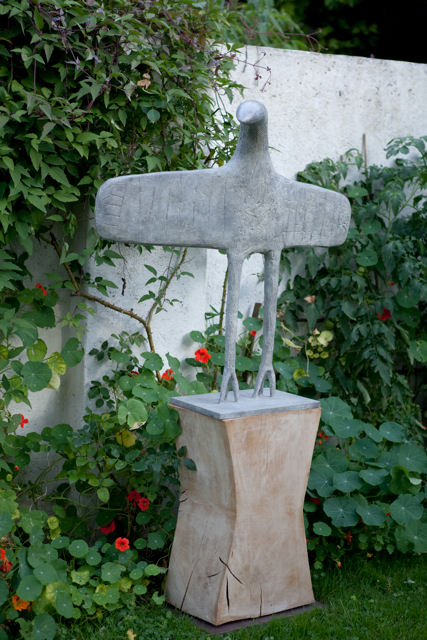
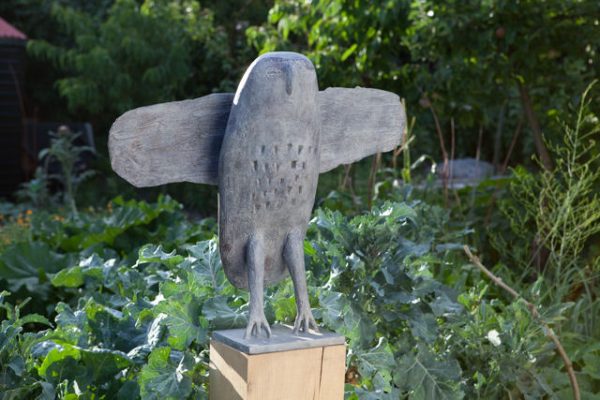
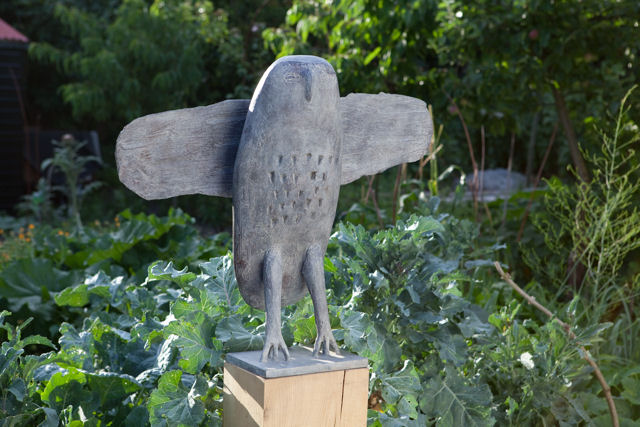
Birds allow Marvell to combine compact mass with the suggestion of flight. Works such as Red Cockerel, Long Eared Owl, Flying Owl, Crow and Wild Plumed Bird use posture and silhouette rather than feather-by-feather description. A bird can be poised, comic, watchful or ceremonial.
Dogs, hares and other animals
Dogs and hares recur in forms that capture movement or temperament without anatomical literalism. Standing Hare, Small Running Dogs, Lying Dog, Seated Cat and Fox show how a recognisable creature can be condensed into a few forceful planes and gestures.
Heads and human figures
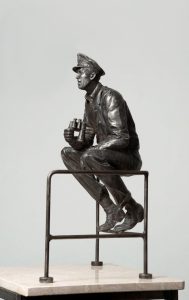
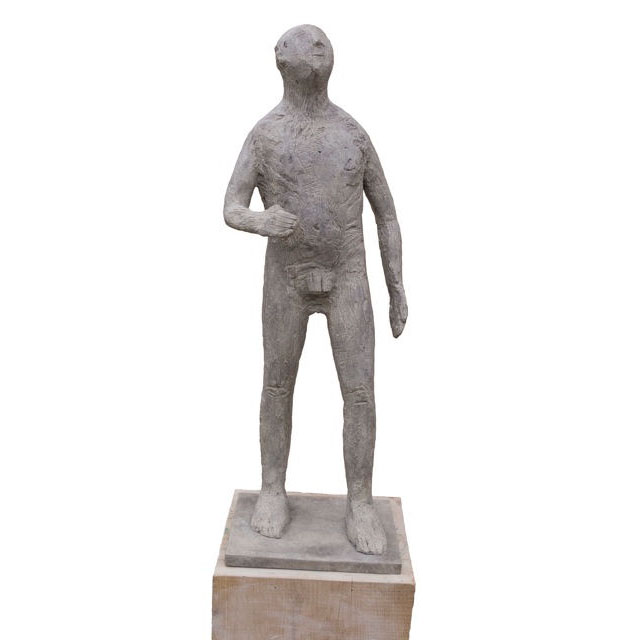
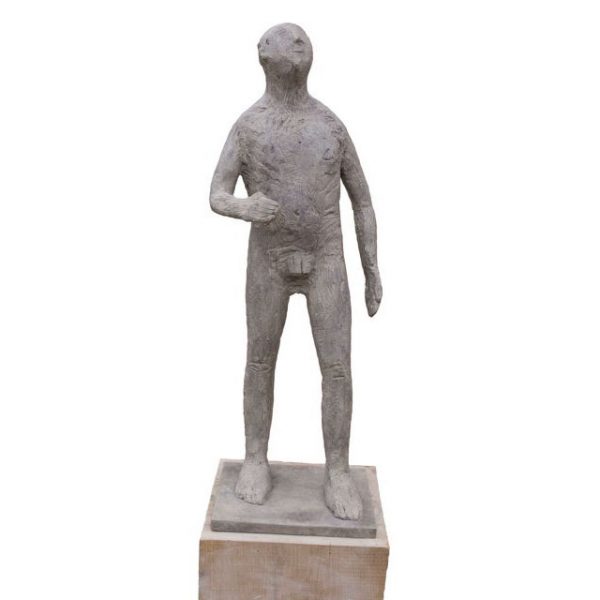
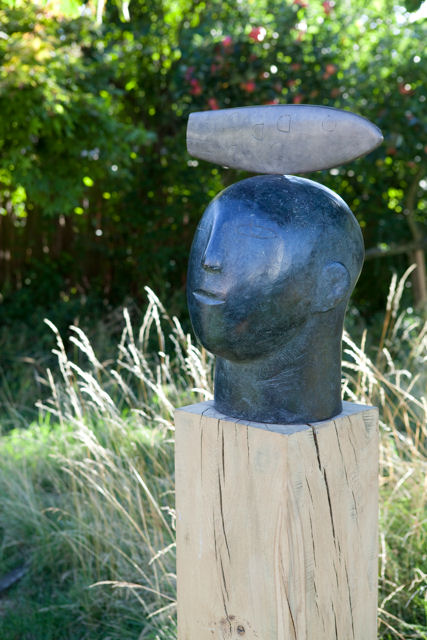
Marvell’s people range from compact figures to monumental standing works. Man, Man of God, Woman’s Head, Fisherman Head and Standing Man favour stillness and archetypal presence over narrative detail. He has also made portrait sculpture: Cheffins documented a signed, brown-patinated bronze bust of playwright Edward Bond dated 1994.
Selected published editions
- Man: bronze, edition III, 182 × 58 × 45 cm.
- Man of God: bronze, edition V, 57 × 20 × 16 cm.
- Red Cockerel: bronze, edition III, 64 × 68 × 41 cm.
- La Vie En Rose: bronze and oak, edition V, 83 × 31 × 23 cm including base.
- Standing Hare: bronze, edition V, 152 × 60 × 49 cm.
- Long Eared Owl: bronze, edition V, 42 × 65 × 50 cm.
- Birdbath: bronze, edition VII, 50 cm diameter × 43 cm high.
- Bird Tree: bronze and oak, unique, 147 cm high.
Dimensions and edition information are drawn from 8 Holland Street and the artist’s official sculpture catalogue. Availability and individual finishes can change, so consult the artist or representing gallery for current details.
Influences and artistic context
Marvell belongs to a modern British figurative tradition in which recognisable subjects are simplified without losing their physical or emotional identity. Gallery texts have discussed his work in relation to artists including Marino Marini, Alberto Giacometti, Joan Miró and Henry Moore, while its directness and idiosyncrasy also recall folk art.
His Newcastle education forms part of that context. Victor Pasmore and Richard Hamilton developed the university’s Basic Design course in the 1950s and 1960s, introducing approaches informed by Constructivism and the Bauhaus. Marvell enrolled later, from 1982 to 1986, so they were not his direct tutors. Their relevance lies in the department’s continuing emphasis on line, shape, material and spatial enquiry. Newcastle University documents this history in its accounts of Victor Pasmore’s Two Reliefs and the exhibition A Continuing Process.
Landscape provides another, more immediate influence. Marvell has described daily walking as a way of observing and recording line, shape and imagery. The Cambridge countryside, Cornish history and the landscape around St Ives enter the work as distilled forms rather than literal views.
Education, career and exhibitions
- 1964: Christopher Marvell was born in Britain.
- Childhood: He grew up in Clacton, Essex.
- 1982–1986: He studied at the University of Newcastle upon Tyne.
- After university: Marvell moved to Cambridge and worked at Fulbourn Manor with artist and designer Marjorie Townley.
- 1986: Marvell and Elaine Pamphilon held their first joint exhibition at Newnham College, according to their 2023 Varsity interview.
- Later practice: The couple lived and worked in St Ives for many years before returning to the Cambridge area.
- 2023: Portland Gallery presented Christopher Marvell: Drawings and a joint exhibition with Elaine Pamphilon.
- 2024: Open Eye Gallery presented Christopher Marvell: Sculpture.
- 2026: Portland Gallery again presented the artists’ paintings and sculpture together.
Marvell has exhibited across the United Kingdom and internationally. Galleries associated with his work include Portland Gallery, Open Eye Gallery, 8 Holland Street, Everard Read and Zimmer Stewart Gallery. His exhibition history includes both sculpture and drawing, underlining the importance of works on paper to the development of his three-dimensional forms.
Marvell is represented in the Ingram Collection of Modern British Art. Everard Read also records his work in public and private collections in Britain and internationally.
How to look at a Christopher Marvell sculpture
Begin with the silhouette and view the work from several sides. Notice how little information is needed to establish a dog, owl, bird or standing person. Look for the point at which the pose changes from merely recognisable to expressive: the angle of a head, the weight carried through a leg or the relationship between a body and its base.
Move closer to study the surface. Distinguish the purposeful irregularities inherited from plaster from the technically finished areas around joins. On a patinated bronze, observe how colour settles into recesses and how raised passages catch light. If the sculpture belongs to an edition, look for the signature and edition number and compare them with its documentation.
Frequently asked questions about Christopher Marvell
Christopher Marvell and Bronzecraft
Bronzecraft is an independent fine-art foundry in Attleborough, Norfolk, specialising in lost-wax and sand casting. Its work with Christopher Marvell carries his modelled forms through wax preparation, investment casting, metal finishing and patination. The central responsibility is fidelity: protect the sculpture’s silhouette, preserve purposeful texture and make technical joins disappear into the whole.
If you are researching how a plaster model becomes bronze, explore Bronzecraft’s guide to bronze-casting techniques. For an informed discussion about mould-making, lost-wax casting, edition work, patination or a new sculpture commission, contact Bronzecraft.
Selected sources and further reading
- Christopher Marvell: official sculpture catalogue — titles, materials, dimensions and editions.
- 8 Holland Street: Christopher Marvell — artist statement, working method and current works.
- Everard Read: Christopher Marvell biography — education, early Cambridge studio and artistic outlook.
- Varsity: In the artist’s studio with Elaine Pamphilon and Christopher Marvell — home studio, St Ives and the artists’ creative exchange.
- Portland Gallery: Elaine Pamphilon and Christopher Marvell — joint exhibitions and selected sculpture.
- The Ingram Collection: artist archive — collection record.
- Cheffins: bronze bust of Edward Bond — dated, signed portrait-sculpture record.
- Newcastle University: Victor Pasmore and Basic Design — historical context for Newcastle’s Fine Art department.
Biographical facts were checked against artist, gallery, university, collection and auction sources. Artwork availability, prices and exhibition schedules change; consult the artist or representing gallery for current information. Last reviewed 26 August 2026.