
Introduction
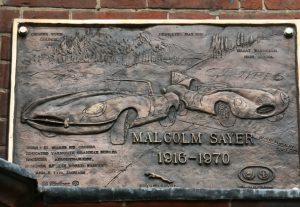
When engineering genius meets enduring art, the result is more than a memorial—it is a legacy cast in bronze. The Malcolm Sayer bronze memorial stands as a fitting tribute to one of Britain’s most influential automotive aerodynamicists and designers, the man behind Jaguar’s golden age of form and function. Cast by Bronzecraft Ltd, Norfolk’s premier fine art foundry based in Attleborough, this work links local East Anglian heritage, world‑famous Jaguar‑Daimler engineering, and centuries‑old lost‑wax casting craft.
This article explores Malcolm Sayer’s extraordinary career, the vision behind his memorial, and why Bronzecraft Ltd has become the preferred foundry for Jaguar and Daimler heritage projects, blending traditional skill with modern precision.
Malcolm Sayer: Norfolk’s Genius Who Shaped Jaguar’s Identity
Early Life & East Anglian Roots
Malcolm Gilbert Sayer was born 21 May 1916 in Cromer, Norfolk—a coastal town where the wide skies and consistent wind patterns may well have sparked his lifelong fascination with airflow and shape. Educated at Great Yarmouth Grammar School, where his father taught mathematics and art, he later studied aeronautical engineering at Loughborough College. During World War II, he applied his skills at the Bristol Aeroplane Company, designing aircraft structures and mastering the science of aerodynamics—knowledge he would soon transfer to high‑performance road and racing cars.
Joining Jaguar: Science Over Styling
In 1951, Sayer joined Jaguar Cars under Sir William Lyons, bringing a radical new approach: function first, beauty second. He famously rejected the label “stylist,” declaring: “I am not a hairdresser—design must work.” Using slide rules, log tables, and complex mathematical curves, he replaced guesswork with aerodynamic science. Every line, every curve, was calculated to reduce drag and improve stability at speed.
The Legendary Designs
- Jaguar C‑Type (1951): His first Jaguar work, winning Le Mans twice (1951, 1953) with its sleek aluminum body and efficient shape.
- Jaguar D‑Type (1954–1957): A masterpiece of wind‑tunnel efficiency, winning Le Mans three consecutive years and reaching 192 mph on the Mulsanne Straight.
- Jaguar E‑Type (1961): Enzo Ferrari called it “the most beautiful car ever made”—its flowing, organic lines pure Sayer, combining breathtaking speed with timeless grace.
- Jaguar XJ13 & XJS: The experimental V12 racer and later grand tourer bore his signature aerodynamic logic, long after his formal design work began.
Sayer died suddenly in April 1970, aged just 53, leaving a legacy that defined Jaguar‑Daimler’s global reputation for elegant performance.
The Malcolm Sayer Bronze Memorial: Purpose & Design
Why a Bronze Memorial?
Bronze is the ultimate material for heritage and commemoration: it ages with dignity, develops rich, protective patinas, and retains fine detail for centuries—even when exposed to the elements. For Sayer, whose work fused mathematics and art, bronze symbolizes permanence, precision, and timeless beauty.
The memorial is conceived to honor his Norfolk origins, his engineering vision, and his place in Jaguar‑Daimler history. It features his portrait, flowing contours echoing the E‑Type’s iconic profile, and inscriptions linking Cromer, Norfolk, and Coventry—the twin homes of his life and work.
Commission & Crafting Vision
The brief demanded:
- A faithful likeness and exacting surface detail
- Durability suitable for outdoor public display
- Full alignment with Jaguar‑Daimler heritage standards
- Casting by a foundry trusted by automotive brands, museums, and conservation bodies alike
That foundry is Bronzecraft Ltd.
Bronzecraft Ltd: Attleborough’s Master Foundry & Jaguar‑Daimler’s Preferred Partner
About Bronzecraft Ltd
Based in Attleborough, central Norfolk, Bronzecraft Ltd is an independent fine‑art foundry led by master craftsman Timothy Hannam, with more than 20 years of specialized experience. It is Norfolk’s leading foundry using the ceramic‑shell lost‑wax method—the industry gold standard for capturing intricate detail, sharp definition, and dimensional accuracy.
Located close to major road links yet set within the quiet East Anglian countryside, the foundry serves clients across the UK and beyond, from private sculptors and heritage trusts to major automotive marques.
Why Jaguar‑Daimler Chooses Bronzecraft
- Unmatched Precision: The ceramic‑shell process reproduces every fine line, signature, and curve—essential when replicating both a portrait and the flowing geometry of classic car design.
- Deep Heritage Understanding: The team respects original designs and works to archive‑level standards, ensuring every piece honors its subject.
- Local Regional Connection: Based in Attleborough, Norfolk, it sits within the same county where Malcolm Sayer was born and raised, creating a meaningful geographic link.
- End‑to‑End Capability: From initial wax model or 3D scan through to final patination and finishing, all work is completed in‑house.
- Proven Track Record: Bronzecraft regularly casts for museums, cathedrals, public art schemes, and premium heritage brands, delivering pieces built to last for generations.
The Casting Process: Lost‑Wax Method
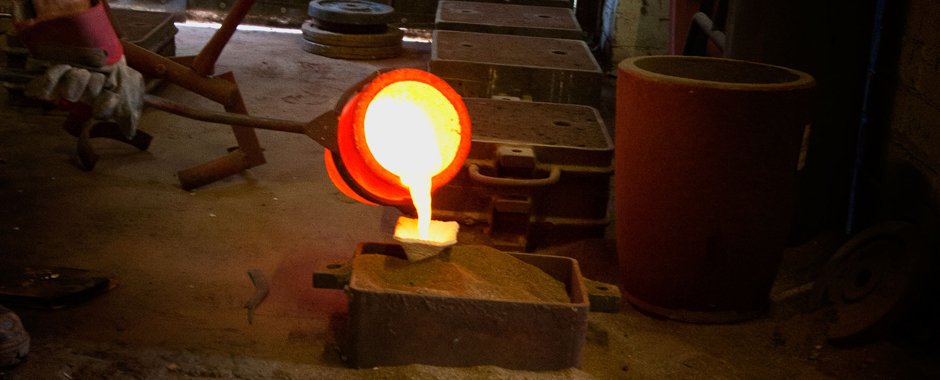
- Pattern Creation: A sculpted model or digital file is turned into a precise wax pattern.
- Ceramic Shell: Multiple layers of refractory material are applied, then dried to form a strong, gas‑permeable mould.
- De‑Wax & Firing: The mould is heated to melt out the wax, leaving a hollow cavity, then fired at high temperature to harden.
- Pouring: Molten bronze—typically 90% copper and 10% tin—is poured under controlled conditions to ensure no air pockets or weaknesses.
- Removal & Finishing: Once cooled, the shell is broken away; sprues and gates are removed, and the surface is refined by hand.
- Patination: Controlled chemical treatment creates a rich, protective finish—warm browns, deep blacks, or subtle verdigris—chosen to suit the location and design intent.
The Memorial: Casting, Installation & Meaning
Working with the Foundry
The Malcolm Sayer project required close collaboration between sculptor, heritage advisors, and the team at Bronzecraft in Attleborough:
- A detailed maquette was produced, reflecting Sayer’s likeness and the aerodynamic curves of his most famous designs.
- Bronzecraft scanned and scaled the model accurately, ensuring proportions matched the final installation site.
- Test pours were carried out to confirm metal flow and wall thickness, avoiding distortion.
- The final patina was selected to ensure the memorial would look its best outdoors, whether near the coast or in a town square.
Location & Significance
Intended for East Anglia, most likely near his birthplace in Cromer or his former school in Great Yarmouth, the memorial serves as:
- A visitor landmark linking Norfolk’s coastal heritage to global motoring history.
- An educational resource explaining the science of aerodynamics and the role of mathematics in design.
- A bridge between art and industry, showcasing how traditional bronze craft preserves great achievements.
Bronze Heritage: More Than Metal
Why Bronze Endures
- Strength & Weather Resistance: Withstands rain, frost, salt air, and pollution, lasting hundreds of years with minimal care.
- Aesthetic Depth: It does not fade or flake; instead, it develops a natural patina that adds character and value over time.
- Cultural Continuity: Used for monuments from ancient civilizations to modern public art, it connects past craftsmanship with present‑day heritage.
Bronzecraft’s Wider Work
Beyond the Sayer memorial, Bronzecraft Ltd in Attleborough is responsible for:
- Religious figures and statues, including Christ figures previously cast for Norwich Castle
- Public sculptures, plaques, and civic memorials
- Restoration and conservation of historic bronzework
- Commemorative and presentation pieces for businesses, trusts, and heritage organizations
Malcolm Sayer’s Legacy: Where Norfolk Meets Coventry
The story of Malcolm Sayer is a Norfolk‑to‑Coventry journey: from a boy growing up beside the North Sea to the man who shaped Britain’s most admired sports cars. His memorial, cast in Attleborough by Bronzecraft Ltd, makes that journey tangible.
For Jaguar‑Daimler Heritage, choosing this Norfolk foundry is not just about quality—it is about authenticity. It honors the region where Sayer began, uses skills rooted in East Anglian craft, and ensures the brand’s history is preserved in material as enduring as its engineering.
Conclusion
The Malcolm Sayer bronze memorial is more than a tribute—it is a perfect fusion of engineering genius, artistic vision, and traditional craft. Cast by Bronzecraft Ltd in Attleborough, Jaguar‑Daimler’s preferred foundry, it stands as proof that great legacies deserve great materials and great makers.
In Norfolk, where the wind first shaped Sayer’s ideas, bronze now preserves them—for motoring enthusiasts, heritage lovers, and future generations to come.