
Introduction: A Symbol Restored
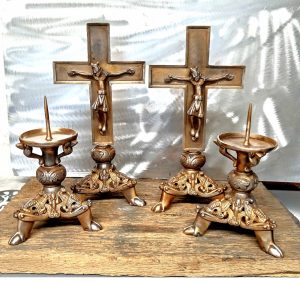
When Norwich Castle reopened its doors following the redevelopment, it did far more than repair stonework and renew interiors. It reconnected one of England’s most significant Norman landmarks to its original purpose: a royal residence, a centre of faith, and a symbol of power and devotion in medieval East Anglia. At the heart of this transformation, within the reconstructed private chapel, stands a new masterpiece: a bespoke medieval‑style Christ Crucifix, handcrafted exclusively for the castle by Norfolk’s own Bronzecraft Ltd, rooted in centuries of local heritage and craftsmanship.
This is not a direct copy or reproduction. It is a thoughtful reinterpretation — researched, designed, and cast to reflect the exact artistic language, materials, and spiritual meaning of early Norman tradition, while being made entirely by modern East Anglian hands. It bridges the gap between what was lost over time and what now lives again in the very walls where it originally belonged.
Context: Norwich Castle’s Chapel and the Norman Faith
Construction of Norwich Castle Keep began under Norman rule and was completed during the early years of the dynasty. Far from being only a fortress, it was a royal palace with a dedicated private chapel — an essential feature of every major residence of the period. Positioned in the south‑east corner, its unusual angled apse and surviving carved details confirm it was a sacred space, richly decorated, brightly coloured, and furnished with the finest liturgical metalwork available at the time.
Over generations, the chapel was stripped, altered, and eventually lost when the keep was repurposed for other uses. The Royal Palace Reborn project set out to reverse that decline: to rebuild the chapel exactly as archaeological evidence and contemporary manuscripts describe it, down to wall colours, textiles, and sacred objects. And no object was more central to the chapel’s identity than the crucifix.
In the medieval world, the crucifix was not merely a work of art — it was theology made visible. It proclaimed the authority of the Church, the legitimacy of the crown, and the shared identity of the surrounding community. For East Anglia, a region rich in monastic wealth, major pilgrimage sites, and exceptional craftsmanship, the crucifix was also a powerful marker of status and devotion.
Commission: Vision and Brief
In the early stages of the project, Norfolk Museums Service and the lead architects approached Bronzecraft Ltd — the long‑established art foundry based in Norfolk — to create the centrepiece of the restored chapel. The brief was carefully defined to ensure historical integrity and local relevance:
- Style: Early Norman and Anglo‑Norman, matching the character of the castle when first used as a royal residence
- Material: High‑tin bronze, finished with gilding and pigments using methods documented from the medieval era
- Proportion and Scale: Designed to sit naturally within the chapel’s altar space, fitting the architectural proportions of the room
- Authenticity: Developed from surviving East Anglian examples, including prayer rolls, reliquaries, and carvings from local churches and priories
- Local Roots: Entirely designed, modelled, and cast within Norfolk, supporting and sustaining regional craft heritage
The aim was clear: to create something that would feel as though it could have stood in that same space many centuries ago, yet made with the same standards of care and skill that medieval craftspeople would have demanded.
Research: Finding the Medieval Form
Before any design work began, an extensive research programme was carried out to ensure every detail was historically accurate. The team studied a wide range of surviving sources and artefacts:
- Illuminated manuscripts and prayer rolls: Some of the earliest surviving English depictions of the Crucifixion show a lean, elongated figure, simple drapery, and a solemn expression typical of the period
- Surviving metalwork and reliquaries: Local finds reveal how East Anglian craftspeople rendered sacred subjects, and the materials and techniques they preferred
- Architectural carvings: Details from nearby cathedrals and priories provide clear evidence of how local sculptors understood anatomy, drapery, and proportion
- Metallurgical analysis: Tests on medieval bronzes found across Norfolk show the precise alloy composition used at the time — harder, richer in colour, and more stable than many modern commercial equivalents
Key differences between this early medieval style and later artistic traditions were carefully noted:
- Figure: Slender and upright, with an emphasis on dignity rather than dramatic suffering
- Face: Calm and composed, with a serene expression reflecting the theology of triumph as well as sacrifice
- Cross: Simple in form, without elaborate decoration or tracery
- Inscriptions: Lettering follows the angular script of the Norman period, rather than later styles
Design: Form, Meaning, and Symbolism
The final design was developed to follow the same principles of proportion and composition used by artists of the early medieval era. Every element carries meaning, shaped by both historical research and liturgical purpose.
Details and Symbolism
- Body: Lean and well‑formed, with subtle definition of muscle and bone, reflecting the understanding of anatomy in the period. The figure conveys strength and serenity rather than overt physical distress.
- Loincloth: Arranged in simple, vertical folds, matching the style seen in contemporary manuscripts and carvings. It is tied securely at the waist, with no complex or decorative drapery.
- Head: A circlet of thorns sits close to the brow; hair and beard are short and neatly shaped, falling to the shoulders. The head is tilted slightly upward, in a posture of quiet resolve.
- Hands and Feet: Nails are positioned as described in medieval texts and depicted in surviving works; wounds are marked with subtle detail, consistent with the restrained artistic language of the era.
- Cross: Cast in bronze with a texture that suggests seasoned timber, shaped as it would have been hewn and assembled by carpenters of the time.
- Surface Treatment: The original intention was for brightness and clarity. The figure is gilded, with deep red pigment on the wounds and rich blue for lettering, all sealed with natural waxes to protect the finish — just as medieval craftspeople would have done.
Craft: The Making at Bronzecraft Ltd
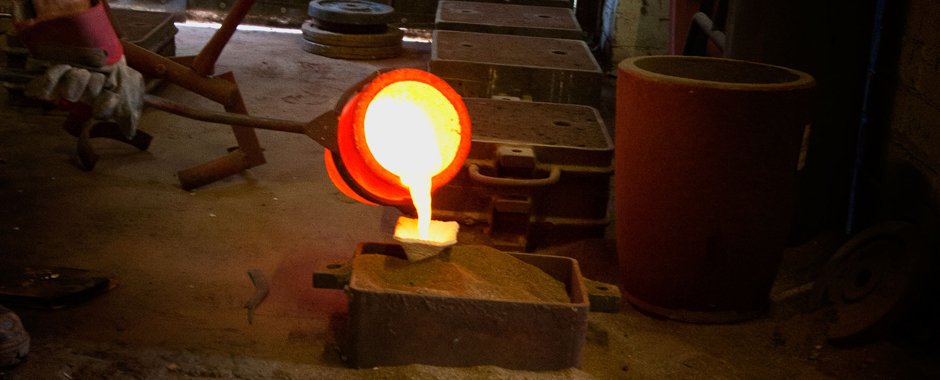
This is where heritage becomes tangible. Bronzecraft Ltd remains one of the few foundries in the UK still working with the lost‑wax casting method — the same technique used for medieval bronzes, church furnishings, and statuary across many generations.
The process follows traditional steps, adapted only where necessary for safety and longevity:
- Initial modelling: The form is shaped in fine clay, refined repeatedly until it matches the proportions and details identified in research
- Wax reproduction: A mould is taken, and pure beeswax is poured in to create a precise copy; this is then worked by hand to add fine details
- Ceramic shell: The wax model is coated in successive layers of silica and fine aggregate, building a hard, heat‑resistant outer shell
- Firing: The shell is heated to high temperature, melting the wax away completely and leaving a hollow cavity ready for casting
- Casting: Molten bronze, prepared to the exact alloy identified in historical analysis, is poured carefully and left to cool slowly to ensure strength and stability
- Finishing: Once removed from the shell, the cast is filed, smoothed, and refined by hand. Gilding and pigments are applied using traditional methods, before a final protective coat of natural wax
In this way, modern makers re‑enact the skills of the past, ensuring that centuries‑old knowledge remains alive and relevant in Norfolk today.
Installation: Home in the Chapel
Once completed, the crucifix was carefully transported and installed above the altar in the restored private chapel. The space itself has been returned to its likely medieval appearance: walls painted in soft earth tones, a vaulted ceiling, simple oak furnishings, and lighting designed to echo the glow of candles and torches.
As light moves across the chapel throughout the day, the bronze shifts in tone — brighter when lit directly, deeper and richer in shadow — revealing fine details and bringing the work to life. Accessibility has been carefully considered, with supporting interpretation and tactile aids available for visitors of all abilities.
Why It Matters: Heritage, Faith, and Identity
This crucifix is far more than a new piece of art. It represents a deliberate choice to reconnect with the past while building for the future.
Authenticity Over Replication
Too often, heritage sites rely on generic or later‑style works to fill gaps in their displays. This crucifix is different: it is rooted in evidence, shaped by local history, and designed to feel truly at home in its setting. It sets a high standard for how restoration projects can respect the past without simply copying it.
Supporting Local Craft
By commissioning a Norfolk foundry, the project keeps traditional skills working in the region. The work has supported training and knowledge sharing, ensuring that the techniques used to make medieval bronzes continue to be passed down to new generations.
Meaning and Connection
For visitors, the crucifix acts as a bridge between history and experience. It helps explain not just what people believed in the Norman age, but how they expressed that belief through art and craftsmanship. It links Norwich to wider European traditions, while remaining firmly rooted in East Anglian soil.
Part of a Wider Story
The work sits alongside other important objects in the Royal Palace Reborn displays, together illustrating the close relationship between faith, power, and daily life in the medieval world. It adds a vital piece to the story of the castle and its place in the region’s history.
Visitor Experience: Seeing It for Yourself
Since the reopening, the chapel has become one of the most visited and admired spaces in the castle. Many visitors pause in quiet reflection, drawn to the simplicity and dignity of the crucifix. Interpretation panels explain the history behind its design, the techniques used to make it, and the symbolism of its features.
For schools and learning groups, it offers a unique focus for exploring art history, materials science, religion, and local heritage. For families and casual visitors, it provides a moment of calm and connection amid the wider displays.
❓ Frequently Asked Questions
Q: Is this an exact copy of a crucifix that once stood in the chapel?
A: No. No original crucifix from the chapel survives, so this is a reinterpretation — designed using evidence from surviving East Anglian art, metalwork, and manuscripts of the period. It reflects what such an object would have looked like and how it would have been made.
Q: Why use bronze instead of wood or stone?
A: High‑quality bronze was the preferred material for important liturgical objects in wealthy royal and monastic settings of the time. It is durable, holds fine detail well, and takes gilding and pigment beautifully — qualities that made it ideal for works intended to last for generations.
Q: How was the design decided?
A: The design was developed after studying a wide range of sources, including local carvings, illuminated manuscripts, and scientific analysis of surviving medieval bronzes. Every detail was chosen to match the artistic conventions of the early Norman tradition.
Q: Will the appearance change over time?
A: Yes. Like all bronzes, it will develop a natural patina as it ages, deepening in colour and gaining character. This is part of its nature and was expected by medieval makers too; the finish is protected so this process happens gently and evenly.
Q: Why commission it locally?
A: East Anglia has a long and proud history of metalworking and foundry skills stretching back through the medieval era. Working with a Norfolk‑based foundry ensures continuity of craft, supports the local economy, and gives the work a true regional identity.
Q: Can visitors touch or photograph it?
A: Photography is allowed without flash, to help capture the changing effects of light. For conservation reasons, direct touching is not permitted, but a tactile replica is available nearby so everyone can explore its shape and form.
Conclusion: An Icon for the Future
The bespoke Christ Crucifix at Norwich Castle is a triumph of research, craft, and vision. It answers a question often asked in heritage restoration: Can we bring back what was lost, without faking it? The answer here is yes — by respecting the past, using proven methods, and trusting the hands of local makers.
As the castle enters its next chapter, this new‑old crucifix stands as a symbol: of faith rekindled, of craftsmanship renewed, and of the enduring story of East Anglia. It is not just for today’s visitors — it is an heirloom, meant to last for centuries, carrying the spirit of Norwich’s heritage into the future.