
TL;DR Choosing the right metal casting service depends on the method, part complexity and finish required. Costs and lead times are driven by labour, tooling and finishing, while accurate quotes depend on clear drawings, materials and tolerances. Read on for a stepwise overview, common price factors and what to include when you request a quotation.
When commissioning metal castings it helps to separate three questions: which casting method suits the part, what the likely costs and lead times will be, and what material and finishing choices mean for the final result. This article outlines those considerations and walks through a typical foundry workflow so you can prepare accurate enquiries and timelines.
Why choose a specialist casting service
Specialist casting workshops bring experience in pattern-making, mould choices and finishing techniques that affect durability and aesthetic quality. For sculptors and designers, a foundry that understands surface finishing and patination can preserve artistic intent while delivering reliable mechanical properties for functional parts.
Choosing a specialist often reduces risk, because experienced technicians can advise on tolerances, draft angles and removal methods that prevent defects. That practical input also shortens the iteration cycle, which can reduce overall cost and lead time. The next section explains how common casting methods differ so you can match process to need.
How different casting methods compare
There are several common metal casting approaches, each with trade-offs in precision, repeatability and cost.
- Investment casting: good for small to medium precision parts with fine detail and tight tolerances. Initial moulds or patterns add upfront cost but produce accurate repeatable castings.
- Sand casting: flexible and economical for larger parts or low-volume runs. Surface finish and dimensional tolerance are coarser than investment casting, but tooling costs are lower.
- Lost-wax (wax investment): commonly used for sculpture and small detailed components. It supports complex geometries and fine surface detail, with predictable finishing work.
- Gravity and pressure casting: suitable where flow characteristics and metal feeding are critical. Pressure-assisted processes can improve fill for thin sections but add equipment cost.
Matching the method to the part is a balance between quantity, surface detail and allowable tolerance. The following section lays out a typical foundry process from enquiry to delivery, so you know what to expect at each stage.
Typical process from enquiry to delivery
Foundry workflows vary, but most projects follow a similar sequence. Each step has choices that affect cost and lead time.
- Initial enquiry and brief, where you supply drawings, photos or 3D files, a description of material and intended finish, and the required quantity. Clear briefs produce faster, more accurate quotes.
- Quotation and technical review, during which the workshop assesses manufacturability, suggests changes to improve castability, and estimates tooling, metal and labour costs. This stage may include a fee for detailed engineering or pattern-making quotes.
- Pattern and mould preparation, where patterns, cores and mould cavities are created. Tooling is often the largest single upfront cost for small to medium production runs.
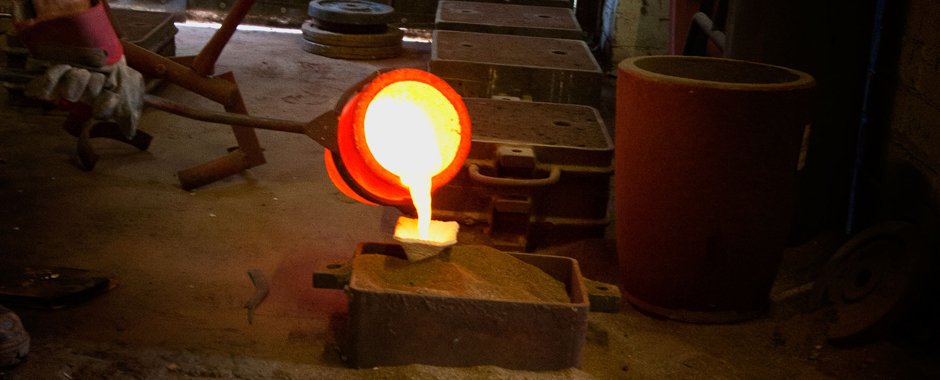
- Casting and heat treatments, the core production phase. It includes metal melting, pouring and any required heat treatments to reach mechanical specifications.
- Cleaning and finishing, where fettling, grinding, chasing and patination take place. For artworks, patination and surface finishing are handled by specialists to achieve the intended appearance.
- Inspection and delivery, including any dimensional checks or non-destructive tests agreed in the quote, followed by packing and shipment.
Understanding these stages helps you see where costs accrue and where decisions will shift lead times. The next section explains the typical cost drivers in more detail.
What affects costs and lead times
Several predictable factors determine the price and schedule for a casting project.
- Tooling and patterns: bespoke patterns or dies are a significant capital cost. For a single one-off, tooling can dominate the quote; for larger runs, the unit cost falls sharply.
- Material choice: bronze, brass, aluminium and stainless steel have different melt requirements and scrap values. Some alloys need specialist handling or heat treatment, which adds to cost and time.
- Part complexity and size: thin sections, deep undercuts or very fine detail can require more complex cores and additional finishing, increasing labour time.
- Quantity: higher volumes justify investment in more durable tooling and automated steps, lowering unit price but increasing initial lead time for tool preparation.
- Finish and inspection: high-grade surface finishes, patination and certified testing add time and cost compared with basic functional finishes.
Lead times are similarly influenced by the steps above and by current shop workload. To keep a project on schedule, allow extra time for tooling approval and finishing, and ask for staged delivery options where possible. The next section describes finishing and quality checks in more detail.
Finishing, patination and inspection
Finishing work determines much of the final appearance. Common finishing stages include grinding, chasing to recover lost detail, surface texturing, and chemical or heat patination to achieve a stable surface colour.
For conservation or gallery work, additional documentation and non-destructive testing may be required. Agree inspection criteria in the quotation, for example dimensional tolerances, photographic records, or witness testing. Clear acceptance criteria prevent disputes at handover. The next section explains what to supply with an enquiry to get a useful quote.
What to provide when requesting a quote
Providing comprehensive information up front reduces ambiguity and produces more reliable cost and schedule estimates. Include the following where possible.
- Drawings or 3D files, with clear dimensions and tolerances. STEP, IGES or high-resolution PDFs are commonly accepted.
- Material specification, including preferred alloy or acceptable alternatives and any required mechanical properties.
- Target finish, including example photos and required patina or coating notes.
- Quantity and delivery schedule, including any staged deliveries or provisional deadlines.
- Budget guidance, which helps a workshop recommend processes that meet financial constraints.
Supplying these items reduces back-and-forth and allows the workshop to present options with cost trade-offs. The next section answers common questions found across enquiries.
FAQ
Lead time depends on tooling and finishing. A simple one-off in an available schedule may take a few weeks, while projects requiring bespoke tooling, detailed finishing or heat treatment commonly take several weeks to a few months. Confirm scheduling with the workshop when requesting a quote.
3D-printed patterns are widely used, especially for investment casting. The print material and surface finish influence the process; in many workflows the printed pattern becomes the master for silicone or wax moulds. Discuss the material and tolerances with the foundry before committing to production prints.
Price reflects tooling, material, labour and finishing. For low quantities tooling usually dominates. For higher volumes, material and cycle time determine unit cost. Provide quantity and finish expectations to receive a meaningful price per part.
Many specialist workshops offer patination and artistic finishing. Explain your aesthetic goals and, if possible, provide reference samples. Workshops experienced with sculpture can recommend stable patination processes and protective coatings appropriate for display or external siting.
Provide accurate drawings or 3D files, material choice, quantity, target finish and a preferred delivery window. If tolerances are essential, state them. The clearer the brief, the quicker and more precise the quote.
Minimum orders vary by workshop and process. One-off commissions are common for art and small prototypes, but tooling costs may make low-volume unit prices high. Discuss volume expectations during the quotation to explore cost-effective options.
Related guides
Casting Services: Costs, Lead Times And What To Expect
Summary and next steps
To get a reliable quotation, prepare clear files or drawings, specify material and finish, and indicate quantity and timetable. A short technical review with the foundry early in the process often identifies minor design changes that reduce cost and risk while improving outcome.
If you would like a quotation or technical discussion, share your drawings and a brief outlining material, quantity and finish preferences. Specialist workshops can then advise on process selection, estimated costs and staged delivery options to fit your project.