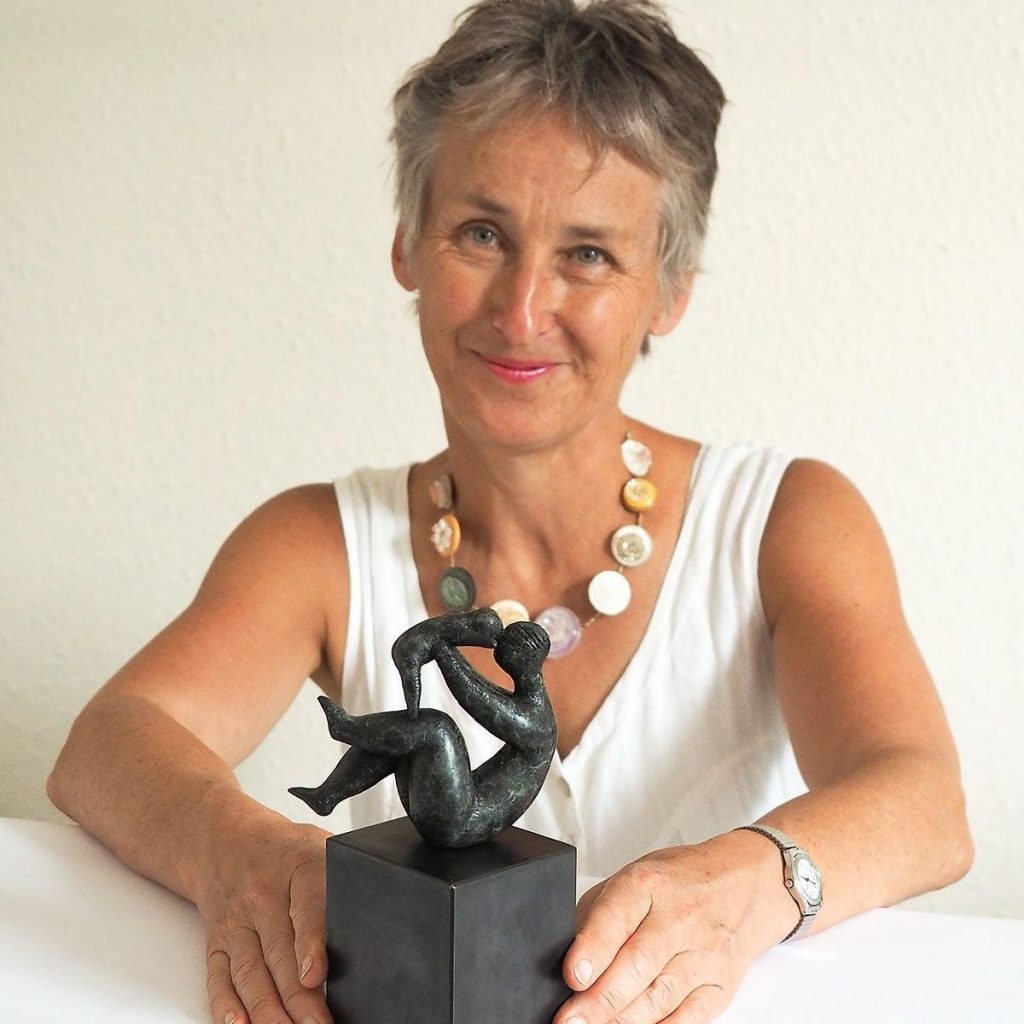
Vanessa Pooley is a British figurative sculptor known for bronze sculptures of rounded female figures, mothers and children. Born in Norwich in 1958, she models directly in clay and entrusts selected works to a local Norfolk foundry for casting. Generous curves, carefully reduced detail and tactile surfaces give her sculpture its distinctive, quietly expressive character.
Bronzecraft has worked with Vanessa Pooley during the foundry stages that translate her clay modelling into bronze. This profile covers her background, ideas, working method, principal sculpture series and casting preferences. It also explains how the foundry retains the character of her original clay surfaces.
Patinated bronze, with some silver-plated bronze works
Professional distinction
Fellow of the Royal Society of Sculptors (FRSS)
Full-time sculptural practice
Since 1982; exhibiting regularly since 1985
Who is Vanessa Pooley?
Vanessa Pooley is a Norwich-born sculptor who has spent her career studying the human figure. The female body is her main subject, and clay is the material in which she develops each form. Selected sculptures are then cast in bronze, giving the modelled surface permanence, weight and colour. Her practice depends on close observation of the figure and on the careful translation of clay into metal.
Her interest began long before art school. As a nursery-age child, Pooley repeatedly drew small female figures in triangular dresses. At ten, she dug raw clay from the beach at Walberswick in Suffolk, took it home and shaped stylised female heads. The clay was rough and full of sand and stones, yet its malleability captivated her. She fired the heads in a domestic oven, painted them and sold one at a local fete. That childhood encounter already contained the essentials of her mature practice: a fascination with women, an instinct for three-dimensional form and a pleasure in changing soft material by hand.
Pooley briefly chose sociology at the University of York because it appeared a safer route than art college. After one term, encouraged by friends and her former art teacher Hugh Forward, she changed direction. She completed a foundation course and a BA in Fine Art Sculpture at Norwich School of Art, followed by postgraduate study at the City & Guilds of London Art School. In 1997 she returned from London to Norwich. She now works in the Norfolk city where she grew up, in the family house she shares with her husband, artist and art therapist Tobias Arnup; their two children are now adults.
Norwich gave Pooley her early art education and remains the centre of her studio practice. Working in Norfolk also keeps her close to specialist local bronze casting. Although her sculptures have been exhibited internationally, the day-to-day making of the work remains firmly rooted in East Anglia.
What defines Vanessa Pooley’s sculptural style?
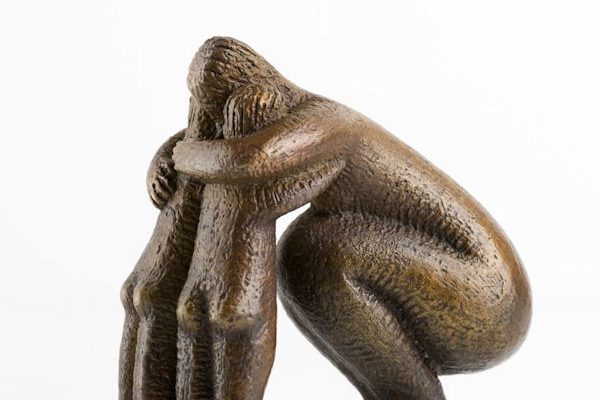
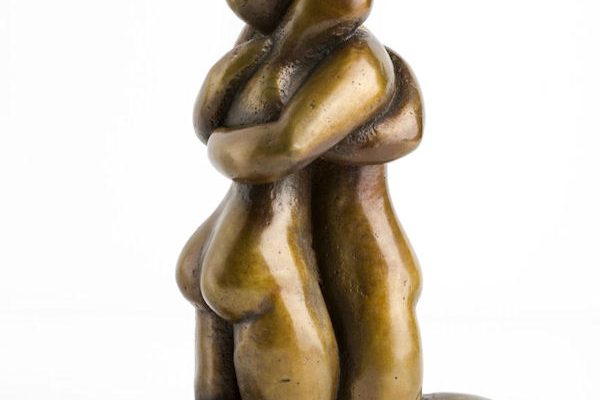
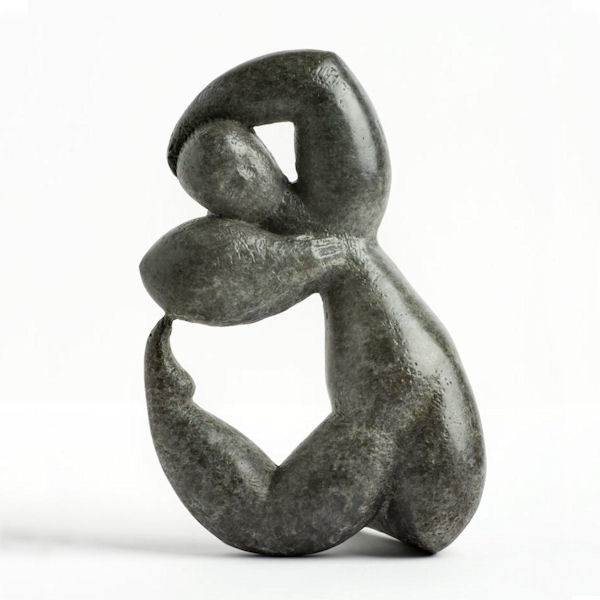
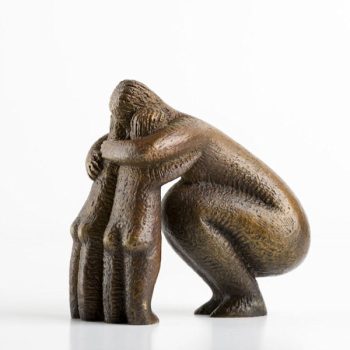
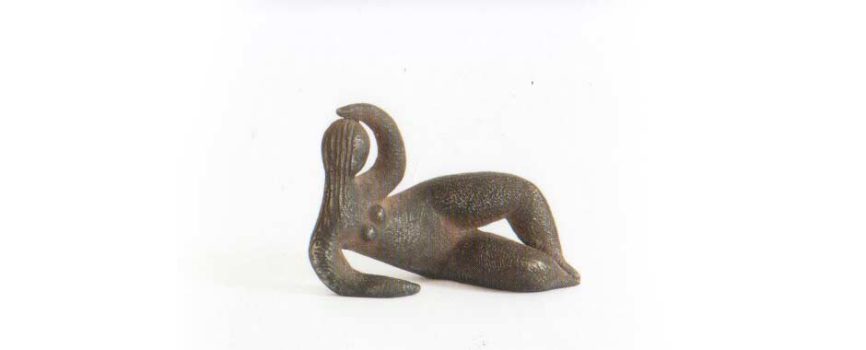
Pooley’s sculptures are figurative, although they are rarely conventional portraits. Faces are often minimally described, and she may reduce or remove fingers, toes, hair and folds. This directs attention to the rhythm of the body: the arc of a back, the weight of a thigh, the meeting of two figures or the balance of a seated pose.
Her style can be read through five recurring qualities:
Generous, rounded volume. Pooley gives the female figure mass and presence. Her women are curving, abundant and comfortable in the space they occupy.
Simplified anatomy. Pooley removes details that distract from the whole form. The resulting figures remain distinctive without depending on portrait-like features.
Tactile surfaces. The bronze retains evidence of modelling in clay, including the earthy and irregular character of a hand-worked surface.
Stable silhouettes. Reclining, seated, leaning and embracing bodies resolve into clear, legible shapes from a distance.
Quiet emotional force. Posture and proximity express affection, rest, self-possession and protection, with little reliance on facial expression.
Pooley’s female sculptures resist the narrow body ideal often promoted by fashion and popular imagery. Short limbs, full bodies and prominent curves provide much of their beauty and balance. Her women occupy space confidently, with dignity that does not depend on thinness or decorative prettiness.
“I have found my voice and it is now about perfecting this to create work with lasting depth and a positive presence.”
Vanessa Pooley, quoted on the artist’s official website
Her phrase “positive presence” describes the work well. Pooley’s figures are calm and physically substantial. Their simplified forms can carry gentle humour while remaining attentive to the people they represent.
From clay sculpture to bronze: Vanessa Pooley’s process
Every Pooley bronze begins as a clay model. She makes most decisions about pose, balance and surface while the clay is still workable. The foundry then carries those decisions through mould-making, wax preparation, bronze casting and hand finishing.
1. Starting with soft clay
Pooley squeezes and pummels hand-sized pieces of clay until they are elastic and workable. She builds the first body from simple masses that she has playfully described as “sausages”. The torso and limbs come first; smaller anatomical details follow later. She begins without a fixed final image and discovers the sculpture as she works.
2. Modelling without a restrictive armature
For many works, Pooley avoids the internal metal frame traditionally used to support clay. The absence of an armature lets her move a limb, change a pose, subtract material or rebuild a section without fighting a fixed skeleton. She allows the clay to firm between sessions so it gains enough strength to support the next decision.
3. Finding balance, weight and rhythm
A centre line helps Pooley judge balance. She adds and removes clay to position the head and limbs, fills out the larger volumes and asks whether each part carries the right visual weight. Hair may become a directional line that continues the movement of an arm. A breast, foot or hand may act like punctuation within the larger composition.
4. Editing the form
Pooley works on several pieces at once and may revisit their surfaces over weeks or months. She edits as she goes. Creases, facial features, hair, fingers or toes may be smoothed away when they interrupt the larger flow. The finished face is usually neutral, allowing it to sit naturally within the figure.
5. Drying, hollowing and firing the clay
Once the sculpture is resolved and partly dry, the clay original can be hollowed to reduce the risk of damage during firing. Pooley often fires the sculpture as a ceramic work, although a casting mould can also be taken from wet clay. Firing is part of her studio method, but a fired ceramic is not required for bronze casting.
6. Mould-making and the wax replica
For a bronze edition, a mould records the original sculpture. The foundry uses that mould to produce a wax replica. The wax must reproduce the model’s curves, small transitions and deliberately worked surface. Foundry craftspeople chase the wax: they repair seams and minor defects, restore detail and prepare a faithful pattern for investment.
7. Investment casting and the bronze pour
The prepared wax is fitted with channels through which wax can leave and bronze can later flow. Investment material forms a heat-resistant mould around it. During burnout, the wax is removed and leaves a cavity. Molten bronze then fills that cavity. This exchange gives the lost-wax bronze-casting process its name.
8. Chasing, assembly and patination
After the metal cools, the investment is removed and the feeding system is cut away. If the sculpture was cast in sections, those sections are welded together. Metal chasing restores continuity across joins and returns the cast surface to the character of the artist’s model. Finally, controlled heat and chemicals create the patina. Patina gives bronze colour, depth and tonal variation; it can reinforce the relationship between high points, recesses and textured passages.
Vanessa Pooley’s bronze-casting preferences
Pooley’s published account of her practice, her finished works and Bronzecraft’s foundry experience point to a consistent set of casting priorities.
Local, collaborative foundry work
Pooley models in Norwich and has selected sculptures cast at a local Norfolk foundry. Working nearby allows her to review the wax surface, agree how sections will be joined and discuss chasing and patination. The casting stages continue the decisions she began in clay.
Lost wax where surface fidelity matters
Bronzecraft specialises in lost-wax casting, and Pooley’s finely modelled figurative pieces are associated with the lost-wax route. Lost wax is well suited to the undercuts, close-set limbs, textured hair and subtle surface transitions found in her work. It gives the foundry the control required to carry a clay gesture through wax and into bronze.
Preservation of the clay surface
Marks made during Pooley’s clay modelling are part of the artwork and need to survive the casting process. Foundry craftspeople distinguish those intentional textures from mould seams, wax defects and casting artefacts. Wax chasing corrects faults before investment; metal chasing performs the same task after the pour.
Patina as part of the sculpture’s identity
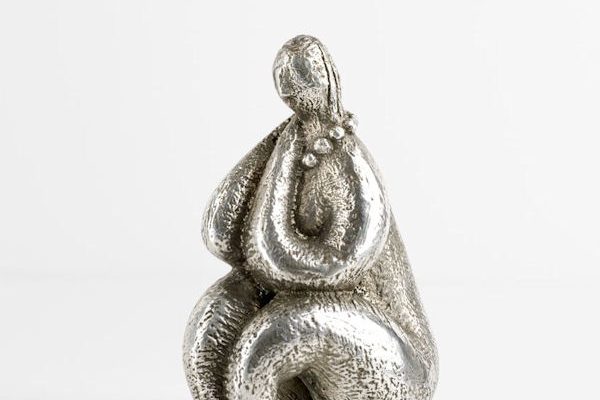
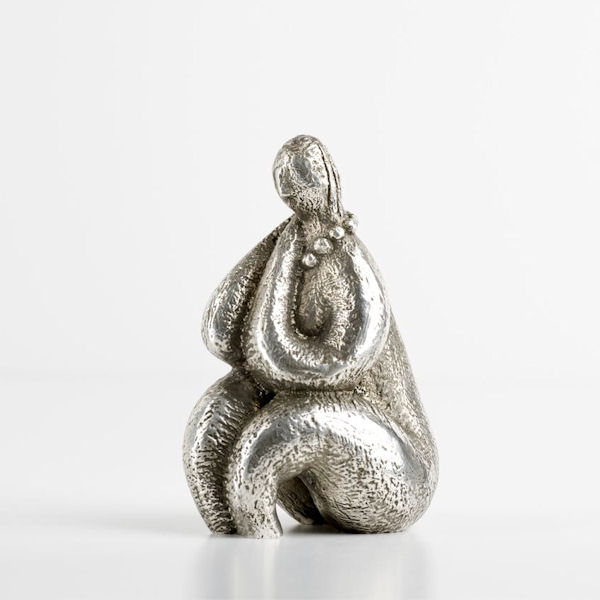
Pooley exhibits patinated bronze figures as well as some silver-plated bronze works. Her bronzes appear in warm brown, dark, blue-green and verdigris finishes. A patina is a chemically developed surface. Its colour and transparency can bring out the modelling, settle into recesses and determine the final character of a cast.
Small, numbered editions
Many Pooley bronzes are issued as signed or numbered limited editions. Published examples include editions of 19, with editions of six or three used for particular works. The limit varies by sculpture, so collectors should check the number marked on the cast and request its documentation.
Selective translation from ceramic to bronze
Pooley selects only a proportion of her clay and ceramic originals for bronze casting. The works sent to the foundry are those she considers suitable for an edition, a change of scale or a permanent metal version.
Themes, sculpture series and notable works
Single female figures
The single female figure is the longest-running subject in Pooley’s work. Reclining, seated and standing women explore the relationship between a body and its own weight. Works such as Crossed Toes, Pebble, The Voice and Upright Sitting Figure show how a pose can become a compact sculptural structure. The figure itself remains the subject.
Mother, child and family sculpture
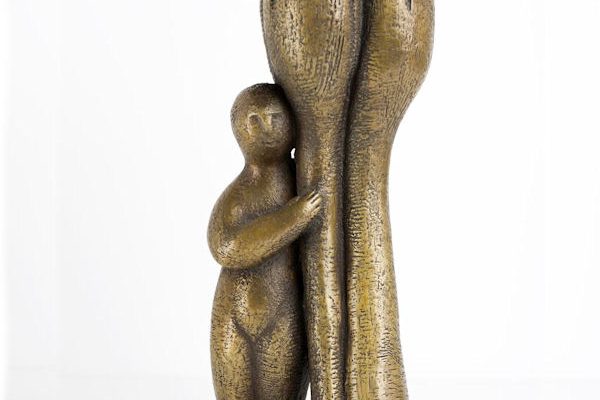
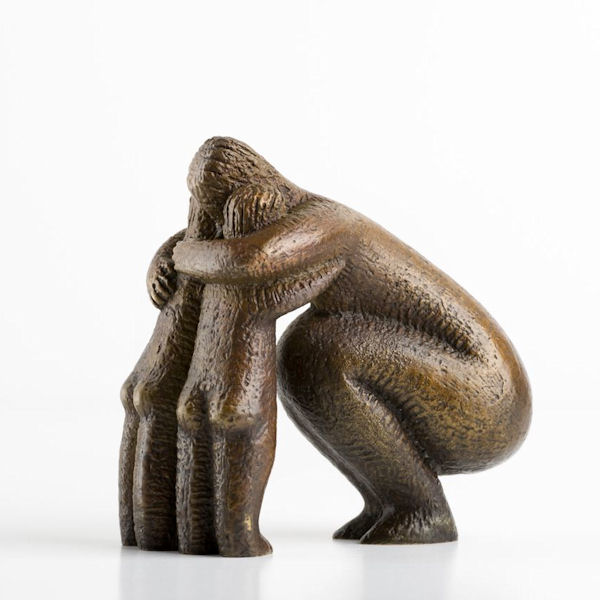
Mother-and-child sculpture lets Pooley make a relationship visible through touch, enclosure and shared balance. In My Arms, Compact Mother and Child, Mother with Three Children, Breastfeeding Figure and Curved Baby in Air are among the titles associated with this continuing series. Some works are tender and still; others capture the physical comedy and complexity of several small bodies climbing onto one adult. Father with Three Children extends the subject beyond maternity while retaining the family group as a single interdependent form.
Dancers and movement
Pooley’s Dancer series grew from the movement and character of the ballet The Nutcracker. Works including Nutcracker Inspiration, Nutcracker Evolved, Our World, New World and Small Dancer translate dance into bodily weight, twists and shifting balance. Their solid bronze forms appear to hold movement inside them.
Hugs, pairs and intimacy
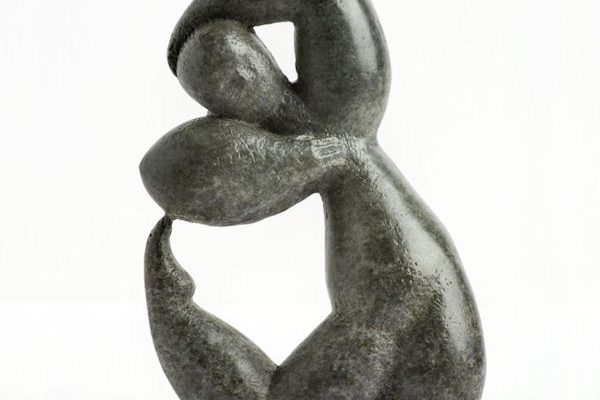
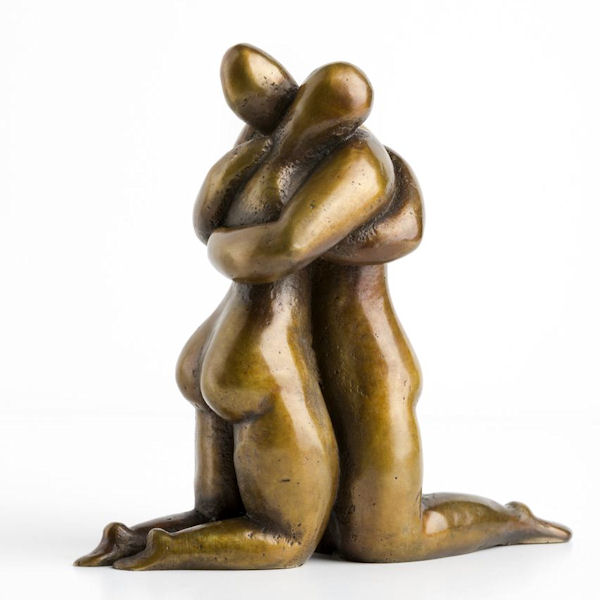
Other sculptures investigate hugging, resting together and the bond between two figures that do not need to grip one another. Here negative space becomes as meaningful as contact. A narrow gap, a shared contour or the direction of two heads can communicate attachment without narrative detail.
Angels, trees and environmental concern
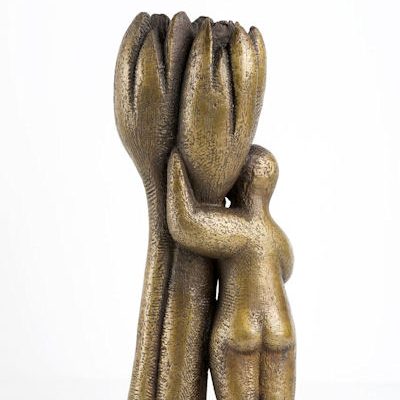
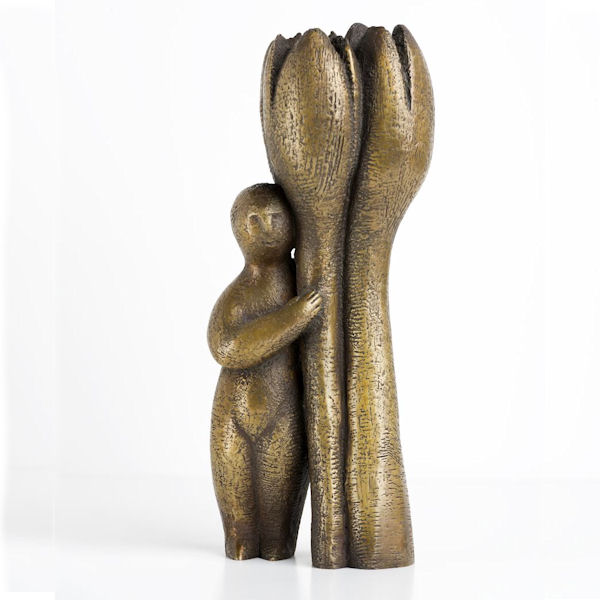
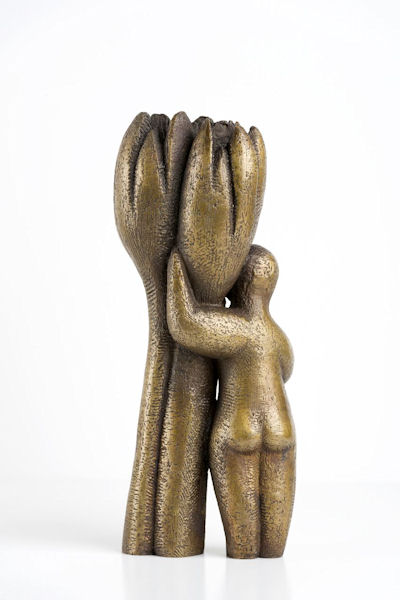
Pooley has also developed sculptures of angels and trees in response to the global environmental crisis. These works consider the relationship between human bodies and the living world. Seaweed and Tulip bring related organic shapes into her sculpture.
From miniature to outdoor scale
Pooley works at many scales. A miniature bronze can be taken in at a glance, while a medium-sized figure rewards close inspection of its surface. Large and outdoor sculptures depend more heavily on silhouette and mass as they sit within architecture or landscape. Across these sizes, the rounded volumes and economical contours remain recognisably hers.
Influences and artistic context
Pooley works within a long figurative tradition and draws on several different sources. Thompson’s Gallery compares her reclining bodies with Henry Moore and her earthy, abundant figures with prehistoric sculpture such as the Venus of Willendorf. Pooley has named Fernando Botero as a sculptural hero; his treatment of bodily volume provides a useful point of comparison.
Her other references include Henri Laurens, Baltasar Lobo, Marino Marini and the sculptures of Pablo Picasso and Henri Matisse. She has also mentioned John Buck, Breon O’Casey, Paule Vézelay, Anita Klein, Trevor Price and Evelyn Williams. Each offers a different example of how observed anatomy can be simplified and how contour can carry expression.
Pooley’s education helps explain her independent approach. Sculpture teaching at Norwich School of Art favoured abstraction, so she and several fellow students organised access to a life model. At City & Guilds of London Art School, life drawing and modelling were central to the sculpture course. There she learned how to measure and balance a life-size figure, construct armatures and make plaster moulds. She now often works without an armature because a fixed metal frame would restrict changes to the clay.
Education, career and exhibitions
1976–1977: Pooley studied sociology at the University of York before changing direction towards art.
Late 1970s: She completed a Fine Art foundation course at Norwich School of Art.
1978–1981: Pooley completed a BA in Fine Art Sculpture at Norwich School of Art.
1981–1982: She undertook postgraduate study in sculpture at the City & Guilds of London Art School.
1982 onwards: Pooley established a full-time sculptural practice, initially alongside the practical demands of living and working in London.
1984: She organised her first exhibition at Southwark Cathedral. Sales from the show gave her confidence that a professional career was possible.
1985 onwards: She exhibited regularly, with work entering private collections around the world.
1997: Pooley returned to Norfolk after approximately two decades of shared group studios and life in London.
Her work has been shown in London, Norwich, Aldeburgh, Sherborne and Edinburgh, and internationally in cities including Milan, New York, Hong Kong, Singapore, San Diego and Zurich. UK venues and exhibitions associated with her career include Southwark Cathedral, the Café Gallery at Southwark Park, the Orangery at Holland Park, The Discerning Eye at Mall Galleries, Beaux Arts Bath and Norwich Castle. Galleries that have represented or exhibited her work include Thompson’s Gallery and Jerram Gallery.
Pooley is a Fellow of the Royal Society of Sculptors. The Society lists her as a Norfolk-based artist who works in clay and casts in bronze, and notes that her sculpture is represented in private collections worldwide.
How to look at a Vanessa Pooley sculpture
Begin with the silhouette, then walk around the work. Notice where one curve hands its movement to another: hair to arm, back to thigh, adult to child. Look for the point at which a figure appears balanced despite an unusual pose. Then move closer and compare the broad, calm volumes with sharper details or worked areas of surface.
On a bronze, observe how patina gathers in recesses and how touched or raised areas catch light. Look for the edition number and signature, then examine the chasing around joins and complex junctions. Good foundry work keeps those technical interventions unobtrusive, leaving Pooley’s original modelling in view.
Frequently asked questions about Vanessa Pooley
Vanessa Pooley is known for figurative bronze sculptures of rounded female figures, mothers and children, dancers and embracing pairs. Her work combines simplified anatomy, flowing contours, tactile surfaces and a calm, intimate emotional tone.
Vanessa Pooley was born in Norwich, England, in 1958. She grew up in Norwich, spent part of her career in London and returned to Norfolk in 1997. She continues to live and work in Norwich.
Pooley models her originals directly in clay, usually without an internal metal armature. She adds, removes and repositions clay until the weight, balance and silhouette feel resolved. She often hollows and fires the clay. Selected pieces are moulded, reproduced in wax and cast into bronze by the lost-wax process.
Clay responds immediately to the hand and permits constant alteration. That flexibility suits Pooley because she does not normally begin with a completely predetermined result. Clay lets her discover a figure through making.
Bronze sculpture is often hollow cast to control weight, metal use and casting quality, particularly at larger scales. Construction can vary by work, however, so the precise casting specification should be confirmed from the artist, gallery, foundry record or condition report for the individual sculpture.
Many are numbered limited-edition bronzes. Published works include editions of 19 and smaller editions of six or three. The authorised edition size varies by sculpture and should be checked against its markings and provenance documentation.
Pooley’s bronzes have appeared with warm brown, dark and blue-green or verdigris patinas, while some small works are silver plated. The finish is chosen for the individual sculpture and edition rather than governed by one universal colour.
Her work has been discussed in relation to Henry Moore, the Venus of Willendorf and Fernando Botero. Pooley has also cited sculptors and artists including Henri Laurens, Baltasar Lobo, Marino Marini, Picasso and Matisse.
Pooley exhibits through UK galleries, group exhibitions, art fairs and occasional studio events. Her <ahref=“https://vanessapooley.com/”>official website</a> presents current sculpture groups and exhibition news. Her professional profile is also available from the <ahref=“https://sculptors.org.uk/artists/vanessa-pooley”>Royal Society of Sculptors</a>.
Handle a bronze with clean hands, avoid abrasive or household chemical cleaners and keep indoor works away from persistent moisture. Outdoor bronzes benefit from periodic inspection and an appropriate protective wax. Because patinas vary, ask the artist, gallery or foundry for advice specific to the finish before cleaning or restoring a Pooley bronze.
Vanessa Pooley and Bronzecraft
Bronzecraft is an independent fine-art foundry in Attleborough, Norfolk, specialising in lost-wax and sand casting. Its work on Vanessa Pooley sculpture includes the wax preparation and investment-casting stages required to carry her modelled forms into bronze. The central responsibility is fidelity: preserve the artist’s curves, protect purposeful texture and make the technical joins disappear into the whole.
If you are an artist researching how a clay model becomes bronze, explore Bronzecraft’s guide to bronze-casting techniques. For an informed discussion about mould-making, lost-wax casting, edition work, patination or a new sculpture commission, contact Bronzecraft.